By bus
- Line 322: 322Pollença - Port d'Alcúdia1.6 km from the beachStop “Can Singala 2”
Stops of the TIB intercity network, measured in a straight line. Check tib.org for the current timetable.
Cove · Pollença
Also known as Cala Boquer · cala Bóquer · Font de Cala Bóquer
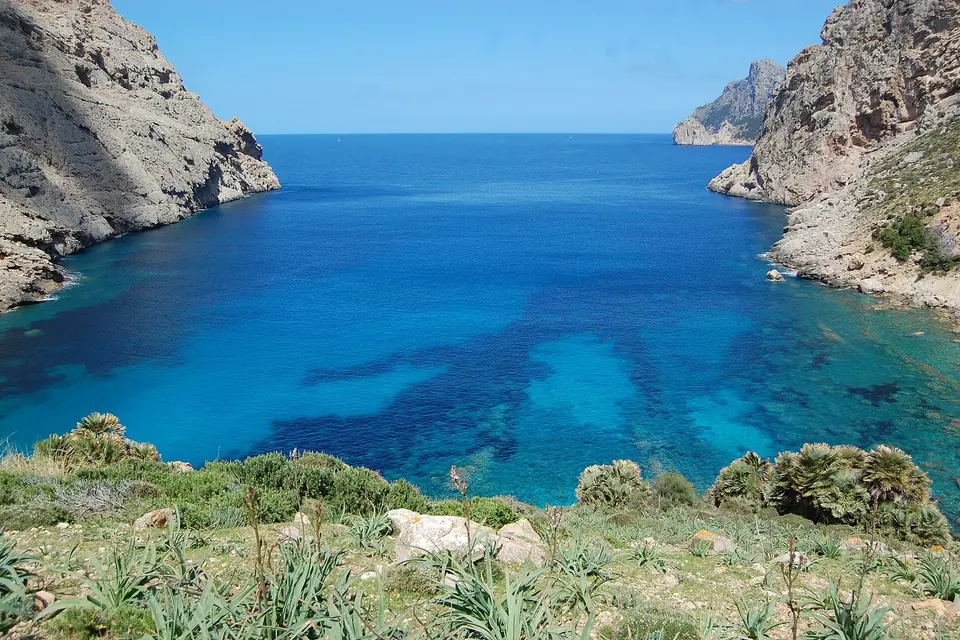
A cove of white sand and gravel in Pollença, isolated and facing north-east. You reach it on foot or by boat, and the nearest car parks listed in OpenStreetMap are more than 1 km away in a straight line.
Stops of the TIB intercity network, measured in a straight line. Check tib.org for the current timetable.
The official listing gives no walking time and OpenStreetMap lists no car park within 1 km of the beach: allow for a longer walk from wherever you leave the car.
The official beach listing includes the boat among the ways to get there.
Average values for Mallorca (NOAA OISST, 1991-2020 climatology), not measured at this spot.
Cala Bóquer opens to the north-east: with north-easterly or easterly winds, swell usually rolls in.
With south-easterly, southerly, south-westerly, westerly or north-westerly winds, by contrast, it is usually more sheltered.
This is a general orientation based on which way it opens, not a forecast: the shape of each coast changes it, so check the day’s weather before you go.
We do not yet list any trip that reaches Cala Bóquer.
Where it is and which coves lie around it.
As the crow flies, nearest first.
More about PollençaArea: Pollença & FormentorAll coves and beaches
Line 322 (Pollença - Port d'Alcúdia): stop “Can Singala 2”, 1.6 km from the beach. Easy path. The official listing gives no walking time and OpenStreetMap lists no car park within 1 km of the beach: allow for a longer walk from wherever you leave the car. The official beach listing includes the boat among the ways to get there.
Line 322 (Pollença - Port d'Alcúdia): stop “Can Singala 2”, 1.6 km from the beach. Stops of the TIB intercity network, measured in a straight line. Check tib.org for the current timetable.
Cala Bóquer opens to the north-east: with north-easterly or easterly winds, swell usually rolls in. With south-easterly, southerly, south-westerly, westerly or north-westerly winds, by contrast, it is usually more sheltered.
Our own text, based on these sources consulted on 2026-10-25. Dates, opening times and bus lines change: check them before you go.