Guide
Mallorca without a car: how to get around by bus, train and bike, and which areas work well
Mallorca without a car: TIB and EMT buses, SFM trains, paying by bank card, what is free for residents only and which areas work well without hiring.
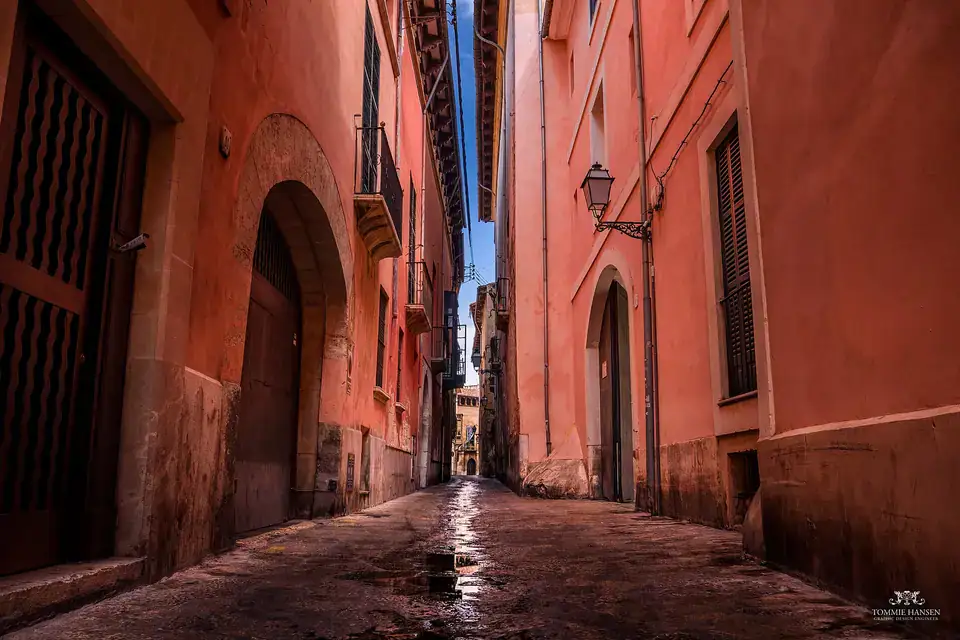
You can get around Mallorca quite well without a car if you choose your base with care: Palma, the bay, the Sóller valley and much of the north coast have a bus or train every day. The difficult places are the corners: the hidden coves of the south-east, the inland Tramuntana or the Formentor road, where the bus does not go or runs only a few times a day.
This guide gathers what we were able to check against official sources: TIB's open data (version of 27 October 2026), TIB's payment and fare pages, the open data of Palma's EMT and the BiciPalma website. The euro prices of TIB tickets do not appear in the text of its pages, so we do not give them. Frequencies are those of a weekday in November in that data and change with the season, so check the timetable at tib.org before you travel.
Which option suits you, by where you stay?
Palma (centre, Santa Catalina, the Born): the easiest base without a car. You can walk and use the EMT, and the Estació Intermodal at Plaça d'Espanya brings together the train, the metro and the intercity bus lines that serve Palma.
Playa de Palma, s'Arenal and Can Pastilla: EMT line 25 links s'Arenal with Queen's Square and the Cathedral, and line 23 with Plaça d'Espanya. In the published autumn timetable, line 25 runs every 10 minutes by day on weekdays and line 23 every 20. The A2 goes to the airport.
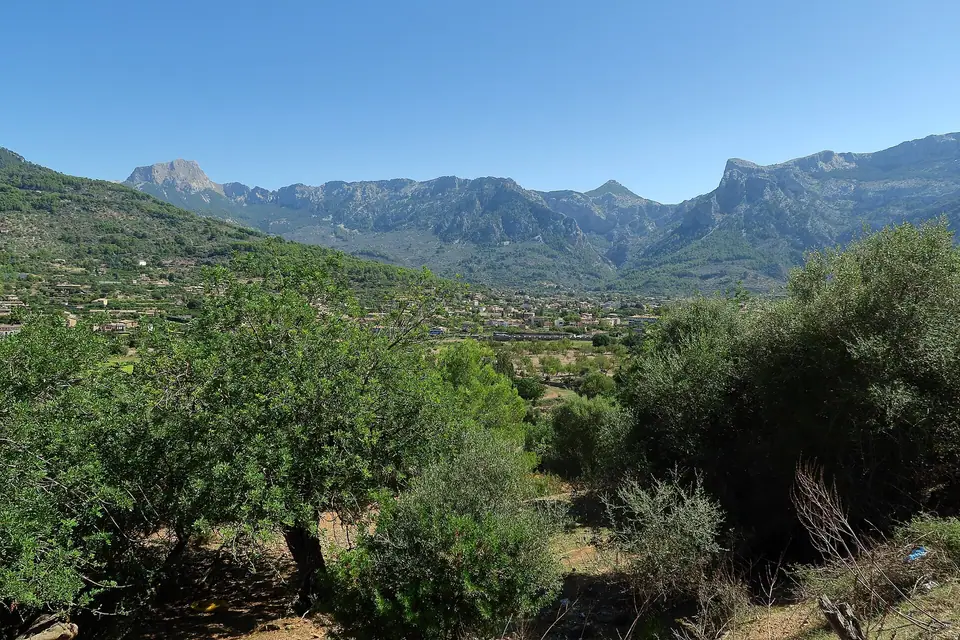
Sóller and Port de Sóller: among the best places to be without a car. There is the historic train and the tram (paid separately), buses 204 and 203 to Palma, line 232 to Fornalutx and the boat to Sa Calobra.
Valldemossa and Deià: TIB line 203 stops in both villages on its way to Sóller. See the Tramuntana section below: there is a seat-reservation pilot that is not meant for tourists.
Calvià and the south-west (Peguera, Santa Ponça, Magaluf, Palmanova, Camp de Mar): TIB lines 101 to 104 link with Palma and the A11 with the airport. Line 121 links Sant Elm with Andratx.
Alcúdia, Port d'Alcúdia, Muro and Can Picafort: the 302 leaves Palma via Inca and runs along the whole bay of Alcúdia. According to our cove data there is a stop about 60 m from Alcúdia beach, 140 m from Muro beach and 340 m from Can Picafort beach.
Pollença and Port de Pollença: TIB line 301, with about 18 departures each way on a weekday in November. Formentor remains the exception: there is no bus to the beach, and you get there by ferry from Port de Pollença or on an excursion.
Cala Millor, Cala Bona and Cala Ratjada (east): in summer there are buses to Palma (401, 411e) and to the airport (A42); those lines only have a published timetable up to 31 October 2026. In winter, check first what is running.
Cala d'Or, Santanyí, Colònia de Sant Jordi and Cala Pi (south and south-east): there is a bus to the villages, but many coves are more than 800 m from the stop as the crow flies. Cala Pi and Cala Santanyí are about 110 and 30 m away, while Caló des Moro, Cala Llombards and Es Trenc are 840 m, 930 m and 1.4 km.
The TIB network: intercity buses from the Estació Intermodal
TIB is the brand of the Consorci de Transports de Mallorca and covers the intercity buses, the train and the metro. The bus lines serving Palma converge on the Estació Intermodal (Plaça d'Espanya), which according to TIB opens from 5:30 to 1:30 every day and has an information point, toilets, left luggage and cafés.
From the Estació Intermodal, according to TIB's open data: the 204 and 203 to Sóller and Port de Sóller (the 203 goes via Valldemossa and Deià); the 202 to Esporles, Banyalbufar and Estellencs; the 301 to Inca, Pollença and Port de Pollença; the 302 to Inca, Port d'Alcúdia and Can Picafort; the 501 to Llucmajor, Campos, Felanitx and Manacor; the 504 to Tolleric and Cala Pi; the 101 to 104 to Camp de Mar, Peguera, Santa Ponça and Magaluf, and the 401 to Cala Millor.
On a weekday in November, that data shows, in each direction, about 33 departures of the 204, 15 of the 203 as far as Port de Sóller (plus 8 that only go as far as Valldemossa), 11 or 12 of the 202, 18 of the 301, 23 to 25 of the 302, about 30 of the 501 and about 20 of the 504. Approximate journey times are 45 minutes to Port de Sóller on the 204, 80 on the 203, 80 or 85 to Port de Pollença and 90 to 95 to Can Picafort.
Watch the season. The summer lines of the east and north coast (401 to Cala Millor, 411e to Cala Ratjada, 515e to Cala d'Or, 517 from Santanyí to Campos, 325 from Alcúdia to Cala Ratjada, 231 from Port de Sóller to Alcúdia via Lluc) have a published timetable only up to 31 October 2026 in that data. The year-round ones we have mentioned (101 to 104, 203, 204, 301, 302, 501 and 504) run up to 31 March 2027. If you travel in winter, check at tib.org which line runs on your day.
TIB also has “TIB ahora”, a page with live bus positions, arrivals at each stop, a route planner with changes and service alerts.
How to pay: bank card, single ticket and Tarjeta Única
By bank card, with no ticket beforehand. TIB accepts contactless debit or credit cards (Visa, Mastercard and Maestro) on bus, train and metro, and presents it as the best-priced option for visitors. You tap the card when you board and when you get off, with the same card or device. When boarding a bus, each person in the group taps; when getting off, one tap is enough for everyone. If you forget to tap out, TIB charges 0.30 euros per person. A group of up to 5 can travel on one card and gets discounts.
Trips are charged the next day in a single amount, and your bank may hold up to 20 euros to check the card; the hold is released when the trips are charged. You can make up to 2 changes across 3 different lines if no more than 60 minutes pass between getting off one and boarding the next, and you never pay more than 4 fare steps. The steps are the zones you cross: travelling within one zone is 0 steps.
Single ticket on the bus. You buy it from the driver, in cash only and with notes up to 20 euros. It is only valid for the line you board, with no changes, and TIB describes it as the least recommended ticket.
Single train and metro ticket. You buy it at the machines in every station, which take cash and cards, and at a ticket counter only at the Estació Intermodal, Inca and Manacor. According to TIB, it costs the same as paying by bank card and is valid for one trip on the rail network only.
Tarjeta Única and Tarjeta Intermodal. In 2026 all trips with either of the two on TIB buses, trains and metro are free, and on Palma's EMT too, under an agreement of the Consell de Govern that has been repeated since 2023. It does not apply to tourists: the Tarjeta Única profiles are defined for residents of the Balearic Islands and the application asks for a registration certificate, unless the ID card already shows a Balearic address. Bank-card fares and single tickets do not change because of that free travel.
SFM trains and the Palma metro
Trains of Serveis Ferroviaris de Mallorca (SFM) leave the Estació Intermodal and run to Inca, sa Pobla and Manacor. According to TIB's open data, the journey takes about 37 minutes to Inca, about 57 to sa Pobla and about 72 to Manacor. On a weekday in November there are about 32 departures each way on the Inca line, about 21 on the sa Pobla line and about 22 on the Manacor line; at weekends, 15 or 16 on the sa Pobla line and 17 on the Manacor line.
All three stations are inland: they are useful for villages inland or for connecting to a bus that goes down to the coast. The single ticket and bank-card payment are the ones in the previous section. For the exact times on each day, check sfm.cat or tib.org, especially at weekends and on public holidays.
The Palma metro (line M1) runs from the Estació Intermodal to the UIB and ParcBit in about 15 minutes. On a weekday there are about 49 departures each way between roughly 6:35 and 21:35; on Saturday, in that data, there are far fewer and the last leaves in the early afternoon. It mainly serves the university and the technology park and does not go through tourist areas.
The Sóller train and tram: a trip of their own, private and paid
The historic Sóller train and the tram to the port are not part of the TIB network: they belong to a private operator, are paid separately and, according to TIB, the zonal fare system does not apply to the Sóller train. We have a guide with the route, the calendar and tips, and a listing with the trip; we do not repeat them here.
If you want to reach Sóller rather than make the journey itself, the public alternative is the bus: the 204 goes via the Jardins d'Alfàbia to Sóller and Port de Sóller (about 45 minutes) and the 203 goes via Valldemossa and Deià (about 80). From the port, the 232 climbs to Fornalutx about 15 times each way on a weekday, in about 20 minutes.
Historic Palma–Sóller train and tram
Ride century-old wooden carriages from Palma to Sóller, with an optional tram continuing to the port.
EMT buses in Palma: the lines visitors use
The EMT is Palma's city bus and is not part of TIB's zonal system. According to the EMT's open data, for the autumn timetable (until 31 December 2026): the A1 runs from the airport to the centre and the A2 to s'Arenal (details are in the airport guide); the 25 links s'Arenal, the Aquàrium, the Palau de Congressos and Queen's Square next to the Cathedral; the 35 runs from the Aquàrium to Queen's Square; the 23 from s'Arenal to Plaça d'Espanya, and the 1 from Portopí to the Sindicat, with stops at the Portopí maritime terminals and at es Jonquet.
On a weekday, that data gives a bus every 10 minutes by day on the 25, 35 and 4, every 20 on the 23 and 1, and every hour on the 30, which passes Portopí, es Jonquet, the park beside the Cathedral and the Palau de Congressos. The 4 links Ses Illetes with Plaça Columnes along Avinguda de Joan Miró and Portopí. For the Fundació Pilar i Joan Miró, the stops belong to lines 46 and 47 and the E46 shuttle. The CC city-centre circular (35 minutes between buses) only appears on weekdays.
Bellver: in the EMT's autumn open data we did not find any line with a stop at the castle. If you plan to go up by bus, check emtpalma.es first.
Ticket: the single in cash on board costs 2 euros, and Palma city council has given the green light to raising it to 3 (approval of 23 October 2026, pending the council plenary, with no start date announced in what we saw). The EMT says on its fares page that it accepts bank cards and has tourist cards and 1-day passes, with no prices in the text. Carry some cash in case the reader fails.
From the airport to your hotel without a car
If you arrive by air, EMT lines A1 and A2 and TIB's lines (A11, A32 or A33, A42 or A43, and A51) link the airport with Palma and the tourist areas. The timetables, stops, taxi and what to do if you arrive in the small hours are in the airport guide, and we do not repeat them here.
TIB names only buses for getting to the airport: its own lines and two urban EMT lines. To carry on to an area with no direct line, the usual pattern is the A1 to central Palma, the Estació Intermodal and, from there, the line for your destination.
By bike: Palma and BiciPalma
Palma is the part of the island that works best by bike. Visit Palma recommends a flat seafront route between Porto Pi and s'Arenal, passing Portitxol, es Molinar and the Platja de Palma, and mentions more than 90 km of bike lanes. Última Hora, in December 2025, put the network at about 108 km, with a third of it on the pavement, and the city council plans to add 15 km of segregated lanes within two years at most. The figures vary with the source and the date.
BiciPalma is still running: it has its own website, app and phone line, sign-up is free and asks for personal details and a payment card. The website shows an annual fee of 30 euros and an occasional-use rate, but we could not confirm its prices or whether a foreign visitor can sign up, so ask before you count on it. For rides around the island, the cycling guide gathers tours and rentals.
Boats: there is no regular public line within Mallorca
We have not found any regular public boat service between points in Mallorca within the TIB network. What exists are private, paid boats: the one from Port de Sóller to Sa Calobra, the ferry from Port de Pollença to Formentor or the coastal excursions. They help you reach places the bus does not, although they are not public transport. You will find them in the Sa Calobra guide and in the boat guide.
What still needs a car or an excursion: the inland Tramuntana and the south-east coves
The inland Tramuntana. Sa Calobra and Cala Tuent have no bus according to our cove data; you get there on the boat from Port de Sóller or by car. Line 312 (Lluc, Inca and Muro) reaches Lluc 3 or 4 times a day in TIB's data, and the 231 from Port de Sóller to Alcúdia via Lluc, with 4 departures a day, only appears up to 31 October 2026.
Valldemossa and Deià in the afternoon. Since 1 July 2026, TIB has been trialling seat reservations on the 15:00 departure from Port de Sóller on line 203 (Deià, Valldemossa, Palma). Only holders of a Tarjeta Única or Tarjeta Intermodal can reserve. The notice does not say what happens to people travelling without a reservation, so if you will depend on that departure, confirm it with TIB (971 177 777) or at tib.org.
Hidden coves. According to our cove data, Es Coll Baix, Cala Varques, Cala Màrmols, Formentor beach, Sa Calobra and Cala Tuent have no bus. Others have a stop but almost 1 km or more away as the crow flies, such as Cala Llombards, Cala s'Almonia or Es Trenc. In the cove index you can see the stop and the distance, listing by listing.
Hiring a car or a motorbike for just one day to reach those coves is a reasonable option: it may be better value than carrying one for the whole stay. We have a guide to car hire and one to scooter and motorbike hire.
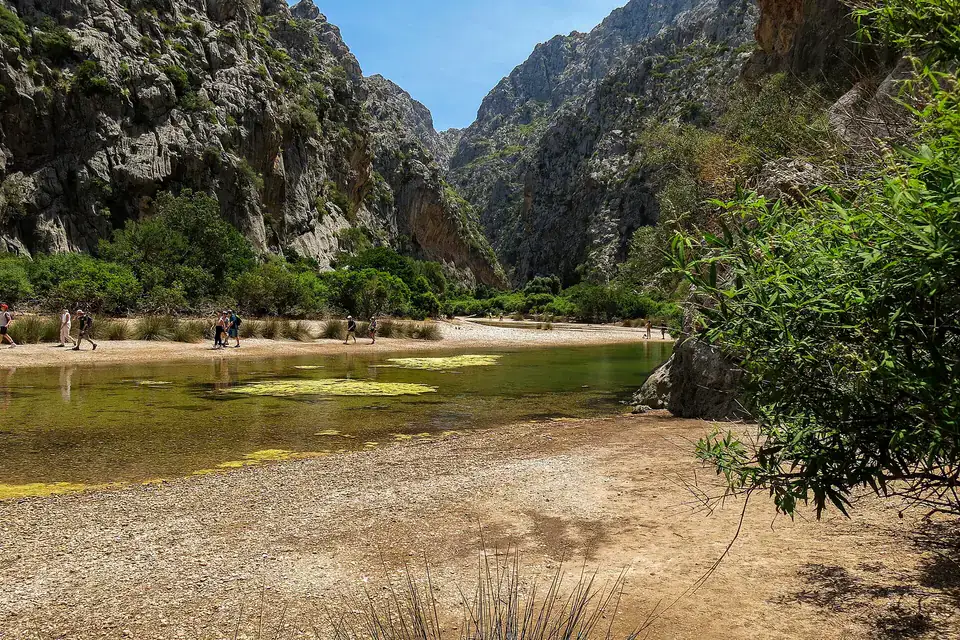
Transportes Marítimos Puerto de Sóller
Boat from Port de Sóller to Sa Calobra and Torrent de Pareis
About 2.5-hour trip along the north coast, with a swim and views of Sa Costera, Cala Tuent and Torrent de Pareis.
Free plans without a car in Palma
Palma has many plans that need neither a car nor a ticket, according to the sources of each listing: parks, promenades, a market and an exhibition space. They are a good way to fill the day you arrive or leave, when you no longer have a car or have not yet collected one.
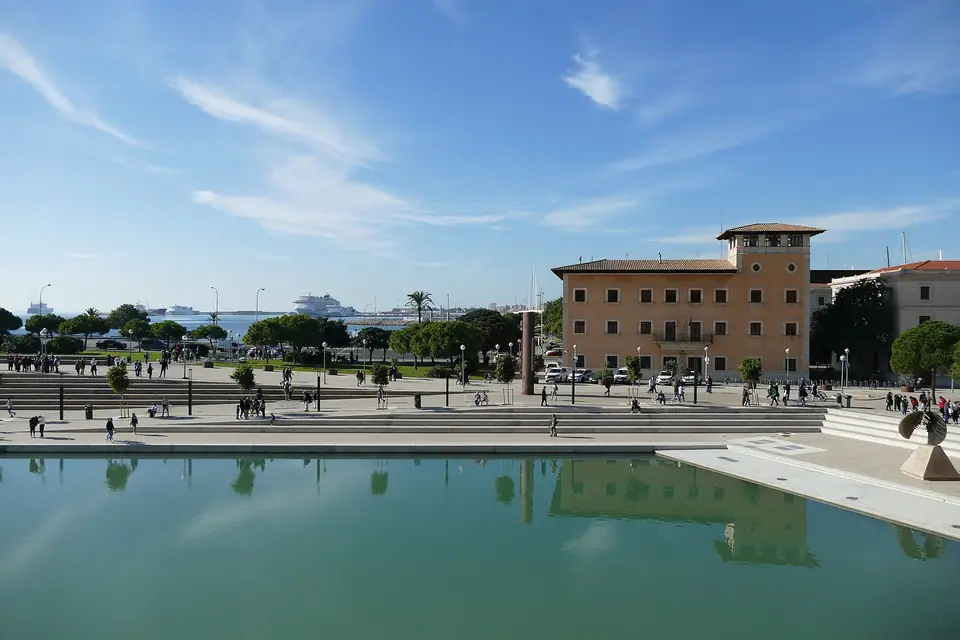
Parc de la Mar: salt-water lake below La Seu (Palma)
Public park between the city wall, the Cathedral and the sea, with a large salt-water lake, a children's area and a café; no admission is listed.
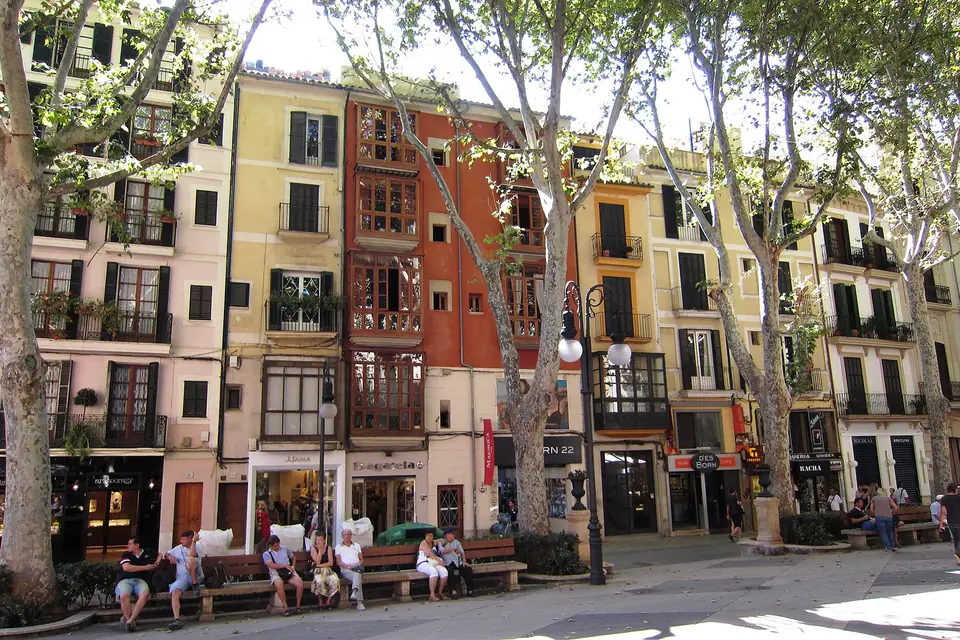
Passeig des Born: pedestrian promenade in central Palma
Tree-lined pedestrian axis in the old town with cafés, restaurants and the Casal Solleric palace; a public street with no admission.
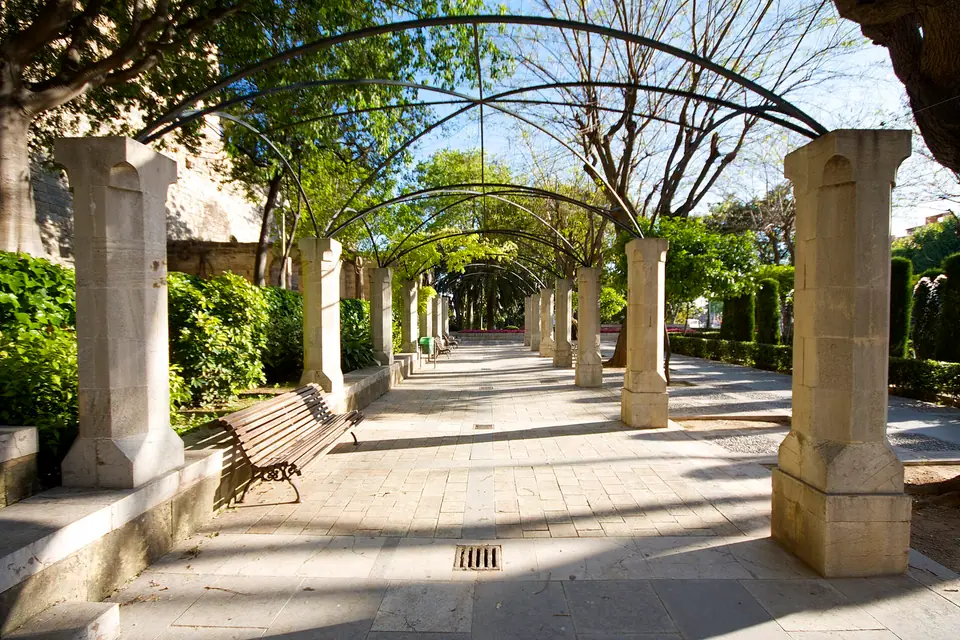
S'Hort del Rei gardens beside the Almudaina (Palma)
Public garden beside the Almudaina Palace, with pergolas, a pond with fountains and a crafts market on set days; no admission is listed.
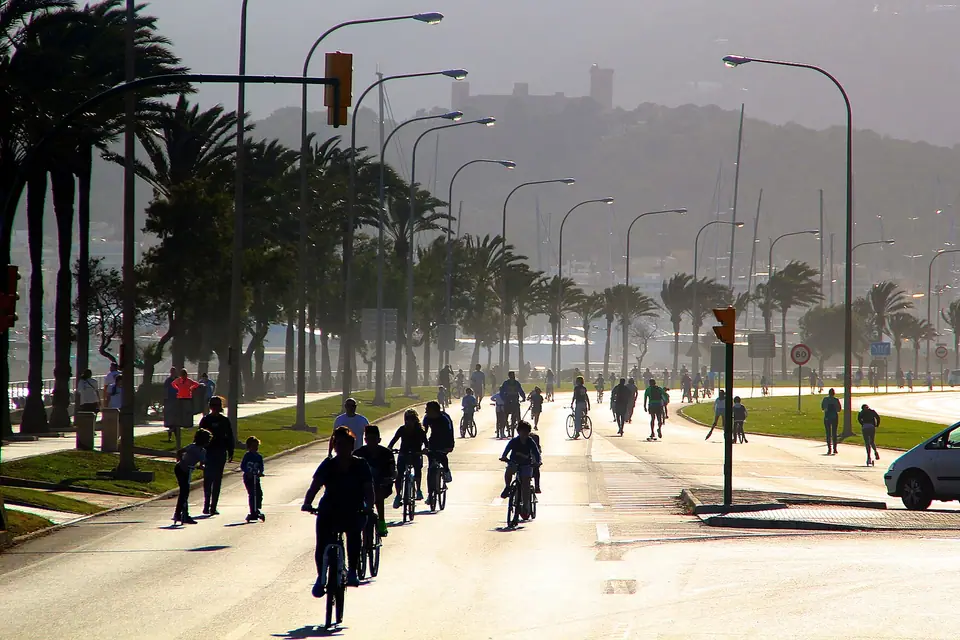
Autoritat Portuària de Balears
Passeig Marítim in Palma: the seafront on foot or by bike
Avinguda Gabriel Roca between Can Pere Antoni and Portopí, redeveloped by the port authority with trees, gardens and a bike lane; no admission.
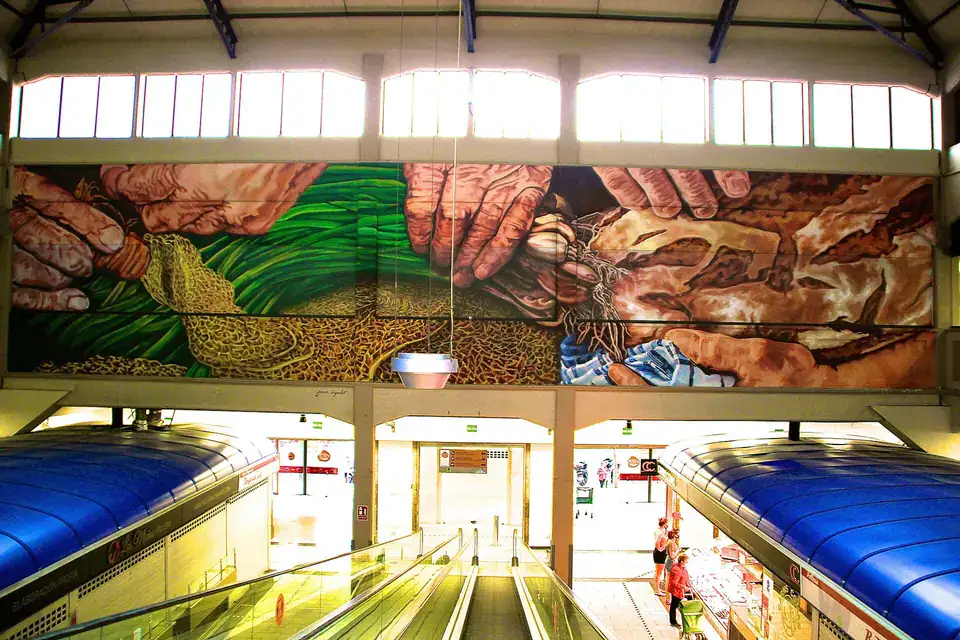
Mercat de l'Olivar: Palma's municipal market
Covered market in central Palma with fish, fruit, meat, cheese and flowers; walking through is free and it opens Monday to Saturday.
Closed on Sundays according to Google
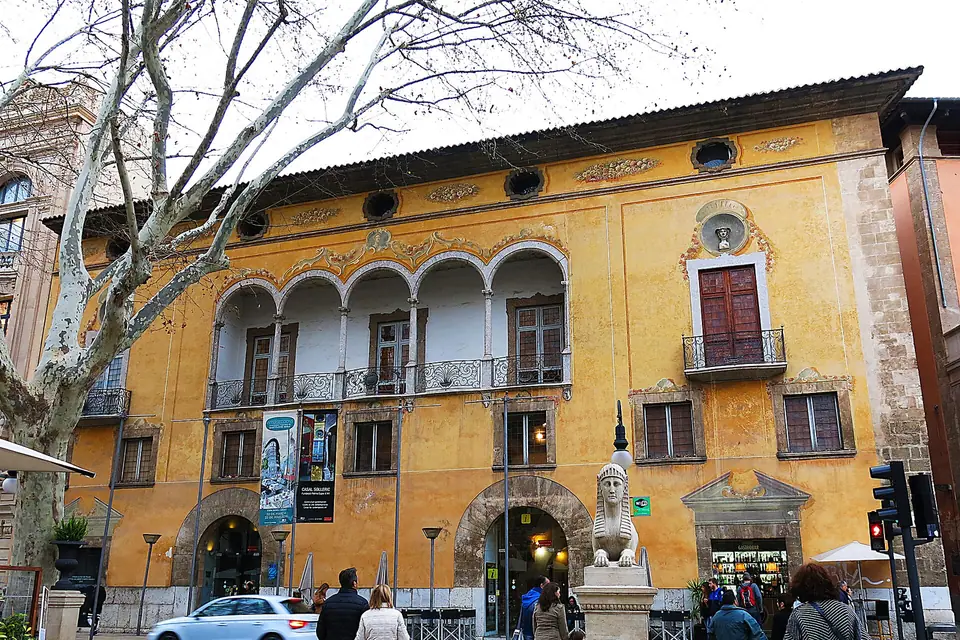
Casal Solleric (Ajuntament de Palma)
Casal Solleric: free exhibitions on the Born (Palma)
The city council's contemporary art centre in a palace on the Passeig des Born; admission is free and exhibitions change through the year.
Closed on Mondays according to Google
Official sources
Our own text, based on these sources as consulted up to 27 October 2026. Rules and traffic restrictions change: check them before you travel.
- TIB: paying by bank card
- TIB: single ticket on board the bus
- TIB: single train and metro ticket
- TIB: zonal fare system
- TIB: Tarjeta Única (profiles and requirements)
- TIB: intercity public transport stays free in 2026
- TIB: Palma Estació Intermodal
- TIB: notice of the seat-reservation pilot on line 203
- TIB: TIB ahora (arrivals, bus positions and alerts)
- TIB: GTFS open data, version 2026.10.27 (CC BY 4.0 licence, Consorci de Transports de Mallorca)
- EMT Palma: open data on lines, stops and timetables (GTFS)
- EMT Palma: fares
- Última Hora (23 Oct 2026): new EMT Palma fares
- BiciPalma: rates and sign-up
- Visit Palma: cycling in Palma
- Última Hora (23 Dec 2025): Palma's cycle network to grow
Frequently asked questions
Can you get around Mallorca without a car?
Yes, depending on the area. Palma, the bay, Sóller, Alcúdia, Pollença and the south-west have a bus or train every day. The hidden coves of the south-east, Sa Calobra, Cala Tuent or Formentor have no bus or are far from the stop.
How do tourists pay for the TIB bus?
With a contactless bank card, tapped when you board and when you get off, with no ticket beforehand, or with a single ticket from the driver, in cash only and with notes up to 20 euros. TIB presents the bank card as the best-priced option for visitors.
Is public transport free for tourists?
No. In 2026 trips with the Tarjeta Intermodal or Tarjeta Única are free on TIB buses, trains and metro and on Palma's EMT, but those cards are for residents of the Balearic Islands. With a bank card or single ticket you pay as usual.
Is there a bus from Palma to Sóller?
Yes. The 204 leaves the Estació Intermodal, with about 33 departures each way on a weekday in November and about 45 minutes to Port de Sóller, and the 203 via Valldemossa and Deià, with 15 departures and about 80 minutes. The historic train is separate and paid.
Are there buses to Cala Millor and Cala Ratjada in winter?
TIB's data of 27 October 2026 only publish a timetable up to 31 October for lines 401 (Cala Millor), 411e (Cala Ratjada) and 325 (Alcúdia to Cala Ratjada). Before planning winter, confirm at tib.org which lines run on your day.
Is there a bus to Sa Calobra?
Not according to our cove data. You get there on the boat from Port de Sóller or by car; we have a Sa Calobra guide with both options.
Seasonal newsletter
Mallorca ideas for every month, in your inbox
What to do, which town to visit and what is at its best, season by season. No filler, and you can unsubscribe in one click.
More guides
- From Palma airport to your hotel: how to get there by bus, taxi, private transfer or hire car
- Almond blossom in Mallorca: when, where and which routes to do in January and February
- Car hire in Mallorca without surprises: insurance, excess, deposit and what to check at pick-up and return
- Boat trips in Mallorca: which one to pick, region by region
- Cabrera boat trip: boats from Colònia de Sant Jordi, how long it takes and what to see
- Catamaran trips in Mallorca: daytime, sunset or glass-bottom
- Cycling in Mallorca: guided bike tours, road bike hire and e-bike routes
- Cycling in Mallorca from February to April: Sa Calobra, Puig Major, Formentor and what to expect
- Caves of Drach: what the visit is like and how it compares with Hams, Artà and Génova
- Dolphin watching in Mallorca: boat trips, sunrise outings and honest expectations
- Private boat trips in Mallorca with a skipper: llaüts, motorboats and yachts by port
- Day trips from Cala Millor: glass-bottom boats, jeep tours, the Caves of Drach and family days out
- Day trips from Cala Ratjada: boats, snorkelling, the Artà caves and tours with pick-up
- Mallorca excursions: which organised day trip to choose and where from
- Mallorca ferry: from the mainland, between the islands (Ibiza, Menorca) and what counts as public service
- Winter festivals in Mallorca, November to February: Dijous Bo, Christmas, Three Kings, Sant Antoni and Sant Sebastià
- Golf in Mallorca: 12 eighteen-hole courses with green fees and seasons
- Jeep safari Mallorca: buggy, quad, jeep and trike tours compared
- Kayaking in Mallorca: guided tours to sea caves, coves and Dragonera
- Things to do in Mallorca with kids: by area and age
- Mallorca in winter, November to February: what is open, what closes and plans that work
- What to do in Mallorca when it rains: indoor ideas by area
- Sunset boat trips in Mallorca: catamaran, yacht, llaüt or kayak, port by port
- Things to see in Mallorca: the must-see sights, area by area
- Sa Calobra by boat from Port de Sóller, and the other ways to get there
- Dragonera island: getting there by boat from Sant Elm or Port d'Andratx, by kayak or with a guide
- Mallorca by scooter or motorbike: which licence you need, what the rules say and which routes to ride
- Hiking in Mallorca: guided and self-guided walks in the Tramuntana and beyond
- Snorkelling in Mallorca: boat trips, kayak tours and coves by area
- Scuba diving in Mallorca: try dives for beginners and boat dives for certified divers
- The Sóller train: how it works, what it costs and how to combine it with the tram and boat
- Sailing trips in Mallorca: half-day, private and multi-day, port by port
- Mallorca wine tours: where to visit a winery and taste, area by area
- Free and cheap things to do in Mallorca
- Easy, low-effort things to do in Mallorca