Guide
Car hire in Mallorca without surprises: insurance, excess, deposit and what to check at pick-up and return
Car hire in Mallorca: licence, card, insurance, excess and deposit, what to check at pick-up and return, and warnings for Formentor, Sa Calobra and Palma.
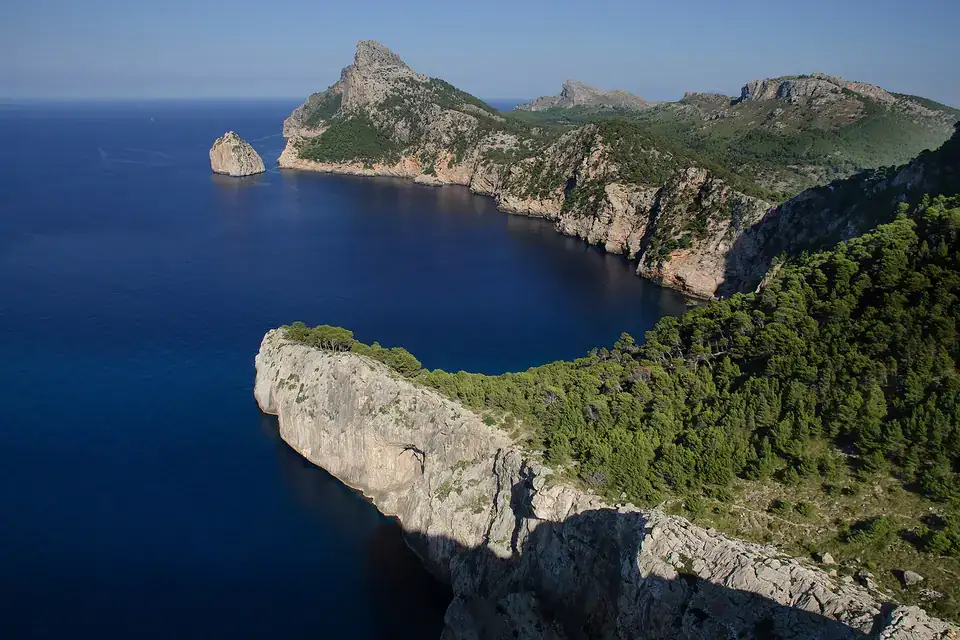
You can get around Mallorca without a car if you stay in Palma or somewhere with good bus lines, but a hire car opens up the small coves, the inland villages, the Serra de Tramuntana and the east of the island at your own pace. It is also where contracts hold the most surprises: the amount blocked on your card, the excess, the fuel, the charges that arrive weeks after you return the car.
This guide gathers what is worth knowing to decide and to hire without surprises: when a car pays off, which licence and which card you need, how insurance, excess and deposit work, what to check at pick-up and return, what to do if you are charged something afterwards, and which warnings apply on the island's roads and when parking. The data comes from the European Consumer Centre Spain, OCU, ADAC, the German European Consumer Centre (EVZ), the DGT, the BOE and Palma city council, and we cite them at the end. We do not rent out cars: you sign the contract with the company you choose. Whatever we could not verify, we say so.
Do you need a car in Mallorca? When yes and when no
A car pays off mainly in four cases: small coves with no bus stop nearby, the inland villages, the Serra de Tramuntana with free stops at the viewpoints, and the east and south-east, where linking several coves and villages in one day is far easier on four wheels.
Without a car you manage fine in Palma and in areas with a direct line, if your plan is hotel and beach. The TIB network (Mallorca's intercity buses) and Palma's EMT cover the main tourist areas. TIB accepts payment with a contactless debit or credit card without buying a ticket first: you validate on boarding and alighting, and its website says it is designed for people visiting the island. How to get from the airport by bus, taxi or transfer is covered in our Palma airport guide.
There are two middle options. One is to hire a car only for the days you will use for coves and the interior, and use public transport for the rest of your stay. The other is a motorbike or scooter, with its own licence and equipment rules, which you will find in our scooter and motorbike guide. For the mountains there is also the Sóller train.
A car also costs time and attention: parking in Palma has rules (see below), and parking next to the best-known coves can be limited. If you are unsure, think about what you want to see: if everything is around your hotel and a bus line, you may not need one.
Where to compare and who you sign the contract with
There are two ways to book: directly on the hire company's website, or through a comparison site or intermediary that gathers offers from several companies. It pays to know who you are signing with. According to the European Consumer Centre Spain (ECC), the party responsible for the contract is normally the hire company and not the intermediary, so the company's terms rule (insurance, fuel, mileage). If you book through an intermediary, the ECC recommends also comparing the price on the company's own website.
At Palma airport, according to Aena, Avis-Budget, Europcar, Goldcar, Hertz, OK Mobility, Record Go and Sixt have a desk in the arrivals hall, and cars are collected in the airport car park. Comparison sites may show more companies: read in the offer where the car is collected.
DiscoverCars is a comparison site that gathers offers from several hire companies, including those at Palma airport. We link to it as an affiliate: if you book through our link we may receive a commission, at no extra cost to you. It is one way to compare prices and conditions, not the only one, and everything below applies just the same if you book directly with the company.
Two details about booking. The ECC and the German EVZ agree that when you hire remotely there is no 14-day right of withdrawal like other online purchases, so free cancellation depends on the terms of your booking: read them before paying. And according to ADAC, an online booking is usually just a reservation of the vehicle; the contract is signed at pick-up, which is why what you sign at the desk matters so much.
Some links are affiliate links: if you book, we may earn a commission at no cost to you. How affiliate links work
Requirements: driving licence, age and documents
With a licence from the European Union or the European Economic Area (Iceland, Liechtenstein and Norway) you can drive in Spain for as long as it is valid, according to the DGT (Spain's traffic authority). If your licence is from another country, the DGT advises getting an International Driving Permit before you travel: it is valid for one year, it is a supplement, and you must carry it with your passport and your national licence. The DGT adds that a foreign licence can be valid without the international permit if it is written in Spanish or comes with an official translation, or follows the model of the Geneva or Vienna conventions, provided it is valid and you meet the age required in Spain. The DGT page dates from 2020, so check the current one for your country.
That is what the rules say about driving. The hire company may also ask for whatever its own terms set: ask before booking whether it requires the international permit.
The minimum age and the years you must have held a licence are set by each company, and there is no single figure. ADAC notes that 21 is a common minimum age, that some companies add a surcharge for drivers under 25 or with little time on their licence, and that from 70 there may be limits or extra costs. According to the ECC, the young-driver surcharge, if there is one, must be included in the price you are given before signing. Check that your correct age is on the booking.
At the desk you will normally be asked for your driving licence, an ID document or passport, and a card in the main driver's name (see below). Bring the booking voucher, on paper or on your phone.
Insurance, excess and deposit: what to understand before you pay
Third-party liability insurance, which covers damage to others, is compulsory for every motor vehicle under Spain's civil liability and motor insurance law, and the ECC says it must be included in the price. What differs between contracts is everything else.
The excess (Selbstbeteiligung in German, franquicia in Spanish) is the part of the damage you pay yourself. According to the ECC, additional insurance with an excess limits what you pay: you cover the repair up to the agreed amount and the company pays beyond that. Check the exceptions: the ECC warns that glass, tyres or windscreen wipers are often not included, and ADAC asks you to check rims, underbody and stone chips as well. ADAC also reminds you that the excess applies to each incident, and that abroad it can be demanded on the spot even if the damage was not your fault; you get it back afterwards, sometimes only once the other driver's insurer has paid.
The deposit or pre-authorisation is the amount the company blocks on your card in case of damage. It is a hold, not a payment. The ECC asks that you are told the amount before signing, and OCU advises asking how much is blocked and for how long. If there is no damage or breach of contract, the company must release it within the agreed period, OCU reminds us.
At the desk the company may offer its own full insurance (sometimes called zero excess or super cover), which lowers the excess and, according to OCU, may reduce or remove the deposit. In return it is a cost worth comparing. Away from the desk, some policies work by reimbursement: you pay the damage to the company and then claim it back from the insurer. Before buying anything, check whether you already have cover through your card or a motoring club (ECC, ADAC), and avoid paying twice for the same thing: ADAC warns that if you have a rate that reimburses the excess, the super insurance at the desk will not be refunded by the intermediary. The ECC warns that once the contract is signed you cannot claim back the payment for extra cover.
If you are pressured at the desk to buy extra cover, the EVZ tells of a customer who already had full cover and paid 300 euros for another policy; with its help he got the money back. Its advice: stay calm, do not sign what you have not understood, leave a record (for example a handwritten note on the contract) and complain to the company's manager and to the intermediary.
DiscoverCars offers its own Full Coverage. According to its help centre, it works by reimbursement: you pay the excess and costs to the hire company and then claim them from DiscoverCars, within 90 days of returning the car; it does not cover damage to third parties and, according to its own website, it does not remove the obligation to leave a deposit at the desk. What it covers and its limit are in your booking voucher: read them before deciding.
Some links are affiliate links: if you book, we may earn a commission at no cost to you. How affiliate links work
No deposit or no credit card: what is possible and what is not
This is one of the most common searches and the honest answer has shades. Conditions depend on each company and each offer, and we cannot promise you will find a hire with no deposit and no credit card.
What is documented: OCU explains that in some cases insurance with more cover reduces the deposit or makes it disappear, and DiscoverCars' own help centre says the extras hire companies sell (Zero Excess, Super Cover) can reduce it, and describes them as expensive. What does not remove it is a reimbursement insurance bought outside the company: DiscoverCars says so of its own Full Coverage.
As for the card, the ECC, the EVZ, ADAC and DiscoverCars agree on the essentials: the usual requirement is a physical credit card in the main driver's name. Many companies do not accept debit cards for the deposit (the EVZ speaks of frequent refusals and DiscoverCars' help centre says they are usually not accepted), and a partner's or travelling companion's card does not work, according to ADAC. The ECC warns that you can book with a debit card and then be required to present a credit card to collect the car.
If you only have a debit card, ask in writing before booking whether the company accepts it for the deposit and with which cover; if they do not confirm, assume it will not work. And if an offer is advertised as having no deposit, read which insurance it includes, what it costs and what charges can be made afterwards.
Fuel, mileage, second driver, child seats and out-of-hours return
Fuel. The ECC distinguishes three policies: pay for a full tank and return it as empty as possible, collect full and return full, or pay at the end for the fuel used. It recommends full-to-full, not tied to packages with other charges, because then you know in advance that fuel will not be added to the price; it may even be cheaper to fill up at a petrol station before returning the car. If you are offered another option, the company must state the fuel price and any refuelling charges before you sign. ADAC warns about inflated prices on fuel prepayment. Check which fuel the car uses: according to the ECC, filling it wrongly can damage the engine and the driver is liable.
Mileage. Ask whether it is unlimited or capped. If there is a per-kilometre charge, the ECC says you must know the exact amount.
Second driver. Everyone who will drive should be named on the contract. OCU lists the additional driver among the extra charges worth checking, and ADAC notes that the main driver is the person named in the contract who leaves the deposit. Ask what happens to the insurance if someone not named drives; do not assume.
Child seats. Article 117 of Spain's General Traffic Regulation requires children 135 cm or shorter to use an approved child restraint system suited to their height and weight, and to travel in the rear seats. They may sit in front, with their restraint, only if the car has no rear seats, if all the rear seats are taken by children in the same situation, or if all the restraints cannot be fitted there; and with a rear-facing restraint on the front seat, the front airbag must be deactivated. Not using the restraint is a serious offence. If you hire it with the car, ask for the exact price in the booking (the ECC asks for this for extras) and check that it is fitted following the manufacturer's instructions.
Out-of-hours return. The ECC recommends returning the car while the office is open and arriving with time to check it with staff: otherwise you take on any damage that appears between the return and the company's inspection. If your flight leaves in the small hours, ask beforehand how out-of-hours return works, what document you get and whether it costs anything; ADAC advises photographing the car in that case. If your arriving flight is delayed, tell the company: we cannot say what policy each one applies.
At pick-up: a checklist
Contract. Ask for a copy, in a language you understand: the ECC says you have the right to receive it in your mother tongue or at least in English, and that any ambiguity is read in your favour. Check that the conditions match the booking and that it includes no services you did not ask for. The EVZ advises not signing without having understood it and not blindly trusting what staff say; a translation app can help.
Damage. Walk around the car with the employee: bodywork, lights, tyres and upholstery, as OCU asks. Every defect must be noted in writing on the document describing the vehicle's condition; the ECC warns that any damage not reported at that moment will be the driver's responsibility. Take photos and, better, a video of the exterior, the interior, the odometer and the fuel gauge: the EVZ advises photographing or filming the car both at pick-up and at return.
Documents and equipment. OCU recommends checking that the car carries the required documents and equipment. According to the DGT, since 1 January 2026 the connected V16 beacon is the only legal hazard pre-warning device in Spain and replaces warning triangles: confirm that the car has one.
Before you leave. Note the fuel level, the fuel type and the assistance phone number. The ECC recommends always carrying the signed copy of the contract; after an accident, noting the details of those involved, filling in the accident report and informing the company immediately; and after a breakdown, not repairing anything without the company's permission.
At return, and if you are charged something afterwards
At return. Arrive with time to check the car with an employee. Ask for proof that you are returning it in good condition, at the right time and office (ECC); OCU adds asking for a document stating the fuel level and that there is no visible damage. Take photos of the exterior, the interior, the fuel gauge and the odometer, which serve as evidence (ECC). Check that the deposit is released or that you get your card slip back (ADAC, OCU).
If you are charged something afterwards, act in order. First, gather the evidence: contract, payment receipts, photos, the return document; OCU insists on keeping all of it. Second, ask the company in writing for the detail of the charge and the evidence of damage, and complain: OCU recommends trying to settle the problem amicably with the company first. If you booked through an intermediary, the EVZ makes a distinction: anything to do with the booking, such as a refund of a prepayment, is for the intermediary; problems with the car or with services bought at the desk are for the hire company.
Third, the complaint form. In the Balearic Islands, businesses that sell goods or provide services to consumers must have complaint forms available to anyone who asks, free and on the spot, according to the Balearic government: they come as sets of three copies (for you, for the authorities and for the business) and a visible notice must say so. If they do not give you one, you can complain directly to the consumer authority. Ask for it at return if there is a dispute.
Fourth, if the charge is improper, the ECC says you can ask your bank to reverse the payment, bearing in mind the time limits, and to block later payments by the company. Fifth, free help: the European Consumer Centre in your country advises and helps reach an agreement in complaints against companies in another EU country, Norway or Iceland (in Germany, the EVZ). The ECC adds that some companies are members of the European Car Rental Conciliation Service (ECRCS), and that the European small claims procedure exists, up to 5,000 euros and without a lawyer, if out-of-court routes fail.
One last warning about fines: the person responsible for traffic and parking offences is the driver. According to the ECC, the company usually charges an administrative fee for passing your details to the body that issues the fine, and the fine later reaches the address you gave in the contract.
Driving in Mallorca: limits, rules and tolls
You drive on the right. Outside built-up areas, the general limit for cars is 90 km/h on conventional roads and 120 km/h on dual carriageways and motorways (article 48 of the General Traffic Regulation); on a conventional road with a physical separation of the two directions, the road owner may set 100. In towns (article 50), the default limit is 20 km/h on streets where road and pavement are on one level, 30 km/h on streets with one lane per direction and 50 km/h on streets with two or more lanes per direction, unless a sign says otherwise. The sign you see always rules.
The alcohol limit is 0.5 g/l in blood or 0.25 mg/l in exhaled air, dropping to 0.3 g/l or 0.15 mg/l in the first two years of holding a licence (article 20). Using a mobile phone while driving is prohibited (article 18). And when overtaking cyclists, article 85, in the wording in force since 1 October 2026, requires at least 1.5 metres of clearance, a full lane change where there is more than one lane per direction and, outside built-up areas, slowing down by at least 20 km/h below the road's limit. Mallorca is an island with many cyclists, especially in the mountains.
Tolls. According to Última Hora, the Sóller tunnel was the only toll in the Balearic Islands and has been free since 28 December 2017, so there are no tolls to pay when driving around the island.
Speed cameras. There are fixed, section and mobile speed checks. The DGT publishes the location of the fixed cameras on the state road network, which does not include every regional or local road, so do not rely on a map: always respect the limit on the sign.
Ma-10, Sa Calobra and Formentor: three roads with a warning
Ma-10, the Serra de Tramuntana. It runs through the mountains from Andratx to Pollença, with continuous bends between Estellencs, Banyalbufar, Valldemossa, Deià, Sóller and Escorca, in a cultural landscape declared a UNESCO World Heritage Site. It demands constant attention: blind bends, narrow stretches, cyclists and, in places, coaches that take up much of the width on tight bends. For a first time, a half-day stretch is the most comfortable, for example Valldemossa, Deià and Sóller. The Balearic government publishes on its website a list of control, restriction and closure points on this and other roads (the one we saw is dated 16 July 2026 and gives no dates): check it before you go.
Sa Calobra, Ma-2141. It leaves the Ma-10 at Escorca and drops to the cove through a series of tight bends, including the Nus de sa Corbata. It is narrow and shared by cars, coaches and cyclists. According to Última Hora (April 2026), the most congested stretch runs from Coll dels Reis to Sa Calobra and coaches struggle to pass cars on the tightest bends. Leave early, give way to coaches, do not stop on the carriageway and allow plenty of time for the climb back. We have found no traffic limit currently in force. If you would rather not drive, see our guide to Sa Calobra by boat from Port de Sóller.
Cap de Formentor, Ma-2210. The restrictions change every year, because the DGT publishes a new resolution. In 2026 they applied from 15 May to 18 October, from 10:00 to 22:00, between kilometre points 2.0 and 19.6. On the first stretch, up to the Formentor beach car park (km 8+000), private vehicles may enter without authorisation while there is space; when it fills, a barrier at km 2+000, on the Pollença side, lets only authorised vehicles through, and entering without permission is penalised. On the second stretch, up to the lighthouse, there is a barrier at km 8+700 and only authorised vehicles pass. Among the categories the DGT can authorise (TIB bus, resident owners in the stretch, bicycles, emergency and official services, vehicles carrying people with reduced mobility with the V-15 sign and, on the first stretch only, discretionary coaches, taxis and VTC) private cars and hire cars are not listed.
Those measures stopped applying on 18 October. To go in 2027 or another year, check the DGT page on access to the Formentor lighthouse: at the time of this guide it says nothing about 2027. The alternative is TIB line 334 (Alcúdia, Port de Pollença and Formentor lighthouse), with stops at the Mirador des Colomer, Formentor beach and Cala Figuera-Cala Murta.
Parking in Palma and at the coves
ORA. ORA is Palma's paid regulated parking. According to the municipal traffic ordinance, you pay with a timed ticket displayed visibly on the windscreen; the maximum time and the fares are set by the city council by zone and change, and the bays are identified by a sign and blue markings on the road. If you exceed your time, the ordinance provides for immobilisation or removal of the car when the ticket time is exceeded by more than sixty minutes, and once your time is up you may not park again within 250 metres for the next 30 minutes. It is a consolidated text for information only: what the meter on your street says rules.
ACIRE. The historic centre has restricted-access areas (ACIRE). According to the ordinance, only exempted vehicles may drive through those streets: public passenger transport, loading and unloading, security and medical services, motorcycles and bicycles, and vehicles with an ACIRE card, which is issued to residents and some businesses. Access is marked with signs and, in some cases, retractable bollards. A hire car has no card, so do not enter a street marked as ACIRE. If your hotel is inside one, ask it before you arrive how to get in: we cannot confirm this for you.
Low-emission zone. Palma also has a low-emission zone (ZBE) inside the Avingudes ring and the seafront, in force since 22 December 2024. According to Mobipalma, cars with environmental label B (until 31 December 2026), C (until 31 December 2029), ECO and 0 may enter without asking for authorisation, and the city council recommends checking your vehicle's label on the DGT website before entering. Breaches are considered serious, with a 200-euro fine. Mobipalma also lists exemptions, including hotels and tourist rentals in the zone. It says nothing about hire cars: ask the company which label yours has.
The coves. Parking next to coves is limited and depends on each one. On each cove's page in Atlas we show, where available, the car parks within one kilometre that appear in OpenStreetMap, whether they are free or paid when the tariff is known, and nearby bus stops. The Balearic government also includes some access roads to coves and beaches in its list of control, restriction and closure points, such as the Ma-6040 towards es Trenc, ses Covetes and Salines. The index of coves and beaches is further down.
Three plans with a listing for a day by car
For your first day with the car, these three listings from our catalogue are in different parts of the island: Valldemossa in the Tramuntana, the Jardins d'Alfàbia inland and the Coves d'Artà in the east. We cannot give you journey times without making them up, so check each listing for location, opening times and prices, with their sources, and check the route in your navigation app the day before.

Royal Charterhouse of Valldemossa
Monastery with cloister, cells and old pharmacy in the Tramuntana's most photogenic village.
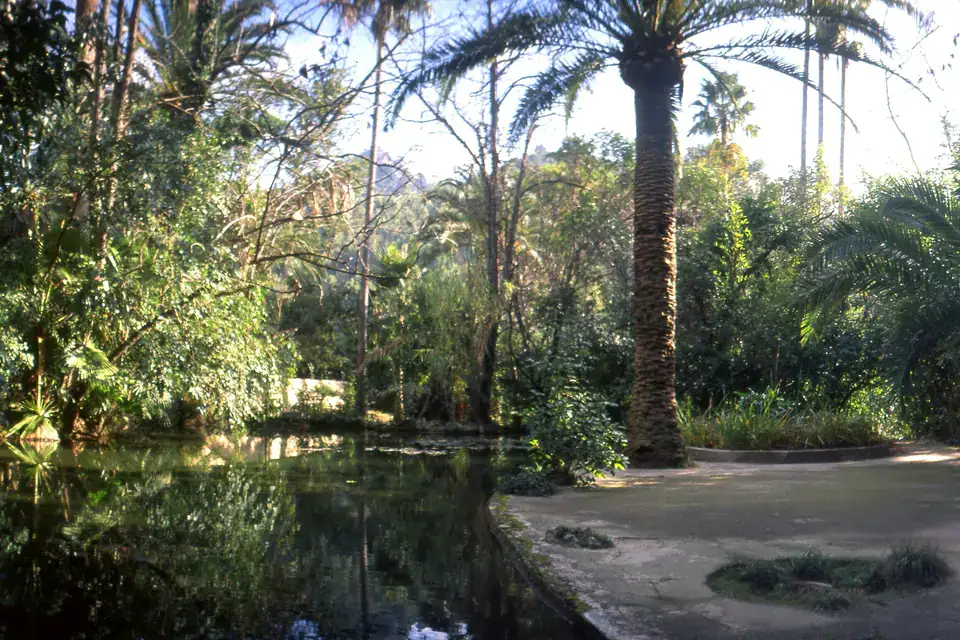
Alfàbia Gardens
Gardens with ponds, pergolas and a manor house, midway between Palma and Sóller.

Quick checklist before you book
Before you pay, check five things: who the company signing the contract is and what its cancellation terms are; what insurance it includes and what the excess is, with its exceptions; how much is blocked as a deposit and on which card (credit, in the main driver's name); the fuel policy (full-to-full) and the mileage; and the cost of extras such as a second driver, a child seat or an age surcharge.
At the desk, do not sign what you have not understood, take photos and video of the car and ask for a copy of the contract. At return, ask for the document confirming handover in good condition and keep everything. If you book through a comparison site such as DiscoverCars, all these steps apply just the same; you will sign the contract with the company that hands you the car.
Some links are affiliate links: if you book, we may earn a commission at no cost to you. How affiliate links work
Official sources
Our own text, based on these sources as consulted up to 26 October 2026. Rules and traffic restrictions change: check them before you travel.
- European Consumer Centre Spain: renting vehicles, rights and recommendations (August 2021)
- EVZ Germany: car hire abroad, how to avoid trouble (updated 3 July 2025)
- ADAC: hiring a car at home and abroad, what to consider (20 October 2026)
- OCU: renting a car, how to avoid problems (21 June 2026)
- OCU: problems with a rental car
- DGT: driving with a foreign licence (page dated 13 November 2020)
- BOE: General Traffic Regulation (RD 1428/2003), consolidated text: articles 18, 20, 48, 50, 85 and 117
- BOE: civil liability and motor insurance (RDL 8/2004), article 2
- DGT: V16 hazard pre-warning devices
- DGT: traffic regulation on access to the Formentor lighthouse (resolution of 14 January 2026)
- Aena: car rental at Palma airport
- TIB: paying with a bank card
- Ajuntament de Palma: municipal traffic ordinance (consolidated text), ACIRE and ORA
- Mobipalma: information on the low-emission zone (ZBE)
- Ajuntament de Palma: ZBE rollout (modified 26 June 2025)
- Balearic Government: complaint form and information notice
- Balearic Government: control, restriction and closure measures (16 July 2026)
- DiscoverCars: help centre, what is Full Coverage?
- DiscoverCars: help centre, do I need to leave a deposit if I buy Full Coverage?
- DGT: fixed speed cameras (dataset)
- Última Hora: the Sóller tunnel stops charging a toll (28-12-2017)
- Última Hora: chaos and queues on the Sa Calobra road (26-04-2026)
Frequently asked questions
Do I need an international driving permit to hire a car in Mallorca?
With an EU or EEA licence, no: the DGT says it is valid in Spain while it is in force. With a licence from another country, the DGT advises getting the international driving permit before you travel, and describes it as a supplement carried with your passport and national licence. The hire company may also require whatever its own terms set, so ask before booking.
Can I hire a car with a debit card?
It depends on the company. The ECC warns that you can sometimes book with a debit card and then be asked for a credit card in the driver's name to collect the car; the EVZ speaks of frequent debit-card refusals, and DiscoverCars' help centre says it is normally not accepted for the deposit. Ask in writing before booking and, if they do not confirm, assume it will not work.
What is the difference between the excess and the deposit?
The excess is the part of the damage you pay yourself if something happens to the car; the deposit or pre-authorisation is the amount the company blocks on your card as a guarantee, and it must release it after return if there is no damage or breach. The ECC asks that you are told the deposit amount before signing.
Is it possible to hire a car with no deposit or no credit card?
We cannot promise it: it depends on each company and offer. OCU explains that insurance with more cover can reduce or remove the deposit, and DiscoverCars says the companies' own extras can reduce it, but that its own Full Coverage, which works by reimbursement, does not remove it. The usual requirement remains a credit card in the main driver's name.
What do I do if I am charged for damage after returning the car?
Gather the contract, receipts, photos and the return document, ask in writing for the detail of the charge and complain to the company first. In the Balearic Islands you can ask for the complaint form. If the charge is improper, the ECC says you can ask your bank to reverse the payment (within its time limits), and the European Consumer Centre in your country can help for free with companies in another EU country.
Do I need a child seat in a hire car?
Yes, if the child is 135 cm or shorter: article 117 of the General Traffic Regulation requires an approved child restraint system suited to their height and weight, and that they travel in the rear seats, with the exceptions the rule sets. Ask for the exact price of the seat when booking.
Can I drive a hire car up to the Formentor lighthouse?
In 2026, from 15 May to 18 October and from 10:00 to 22:00, the stretch up to the lighthouse had a barrier at km 8+700 allowing only authorised vehicles, and the categories the DGT lists do not include private cars or hire cars. Outside those dates and hours, those measures did not apply. For other years, check the DGT page. The alternative is TIB line 334.
Seasonal newsletter
Mallorca ideas for every month, in your inbox
What to do, which town to visit and what is at its best, season by season. No filler, and you can unsubscribe in one click.
More guides
- From Palma airport to your hotel: how to get there by bus, taxi, private transfer or hire car
- Almond blossom in Mallorca: when, where and which routes to do in January and February
- Boat trips in Mallorca: which one to pick, region by region
- Cabrera boat trip: boats from Colònia de Sant Jordi, how long it takes and what to see
- Catamaran trips in Mallorca: daytime, sunset or glass-bottom
- Cycling in Mallorca: guided bike tours, road bike hire and e-bike routes
- Cycling in Mallorca from February to April: Sa Calobra, Puig Major, Formentor and what to expect
- Caves of Drach: what the visit is like and how it compares with Hams, Artà and Génova
- Dolphin watching in Mallorca: boat trips, sunrise outings and honest expectations
- Private boat trips in Mallorca with a skipper: llaüts, motorboats and yachts by port
- Day trips from Cala Millor: glass-bottom boats, jeep tours, the Caves of Drach and family days out
- Day trips from Cala Ratjada: boats, snorkelling, the Artà caves and tours with pick-up
- Mallorca excursions: which organised day trip to choose and where from
- Mallorca ferry: from the mainland, between the islands (Ibiza, Menorca) and what counts as public service
- Winter festivals in Mallorca, November to February: Dijous Bo, Christmas, Three Kings, Sant Antoni and Sant Sebastià
- Golf in Mallorca: 12 eighteen-hole courses with green fees and seasons
- Jeep safari Mallorca: buggy, quad, jeep and trike tours compared
- Kayaking in Mallorca: guided tours to sea caves, coves and Dragonera
- Things to do in Mallorca with kids: by area and age
- Mallorca in winter, November to February: what is open, what closes and plans that work
- What to do in Mallorca when it rains: indoor ideas by area
- Mallorca without a car: how to get around by bus, train and bike, and which areas work well
- Sunset boat trips in Mallorca: catamaran, yacht, llaüt or kayak, port by port
- Things to see in Mallorca: the must-see sights, area by area
- Sa Calobra by boat from Port de Sóller, and the other ways to get there
- Dragonera island: getting there by boat from Sant Elm or Port d'Andratx, by kayak or with a guide
- Mallorca by scooter or motorbike: which licence you need, what the rules say and which routes to ride
- Hiking in Mallorca: guided and self-guided walks in the Tramuntana and beyond
- Snorkelling in Mallorca: boat trips, kayak tours and coves by area
- Scuba diving in Mallorca: try dives for beginners and boat dives for certified divers
- The Sóller train: how it works, what it costs and how to combine it with the tram and boat
- Sailing trips in Mallorca: half-day, private and multi-day, port by port
- Mallorca wine tours: where to visit a winery and taste, area by area
- Free and cheap things to do in Mallorca
- Easy, low-effort things to do in Mallorca