Guide
Mallorca ferry: from the mainland, between the islands (Ibiza, Menorca) and what counts as public service
Ferries to Mallorca from Barcelona, Valencia and Dénia, plus Palma–Ibiza and Alcúdia–Menorca. What is public service, what is private, documents and tips.
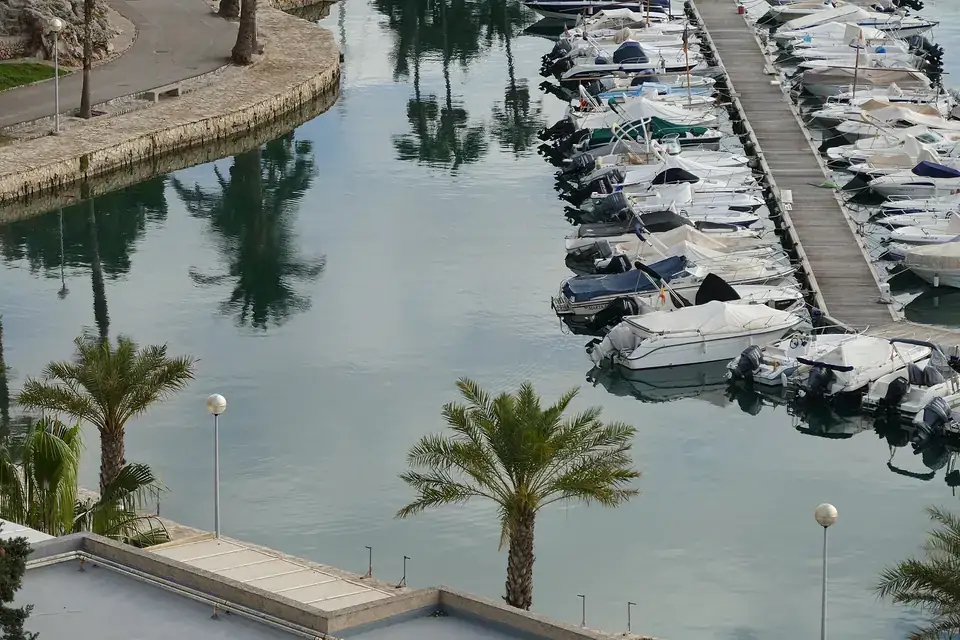
Mallorca has two ports for ferries arriving from the mainland and from other islands: Palma, the main one, and Alcúdia in the north. Palma receives ships from Barcelona, Valencia and Dénia; Alcúdia, those from Barcelona and the ones crossing from Menorca. The operators that list these routes on their websites as of October 2026 are Baleària, Trasmed and GNV, plus Corsica Ferries from France.
This guide gathers what we could check on the operators' websites, in the official gazettes and on the pages of the Balearic government, the Consell de Mallorca and the EMT and TIB bus companies. It includes a section on what is public and what is regulated, because the difference matters: the ships on the inter-island routes belong to private companies, but Balearic and Spanish law set minimums and passenger rights for them, and residents get a discount. What we could not check, we say so. Timetables and durations change: always confirm with the operator.
From the mainland and France to Mallorca: routes and operators
Baleària links Barcelona with Palma and with Alcúdia. Its website gives about 3 hours 30 minutes for the Margarita Salas fast ferry and about 7 hours 15 minutes for the conventional ferries on that route, and it also mentions overnight ferries with cabins to Palma or Alcúdia.
From Valencia, Baleària runs an overnight crossing to Palma that its website describes as a daily connection; it gives 7 to 9 hours depending on the ship and the sea. From Dénia, its fast ferry to Palma takes about 5 hours 15 minutes because it includes a short stop in Ibiza.
Trasmed (Grimaldi group) lists Barcelona–Palma, Barcelona–Alcúdia and Valencia–Palma; only on the last one does it give a duration, about 7 hours, with day and night sailings. GNV (MSC group) lists Barcelona–Palma and Valencia–Palma: about 7 hours from Valencia and, from Barcelona, between 6 h 15 min and 7 h 30 min depending on the page of its website.
From France, Corsica Ferries lists Toulon–Alcúdia and Sète–Alcúdia on its website; for Mallorca it mentions 3 sailings a week from Toulon, an overnight crossing arriving the next morning. The Baleària, Trasmed and GNV routes we checked leave from Barcelona, Valencia or Dénia. Dates and season: check with the operator.
We do not quote prices: each operator shows 'from' fares that change with the date, the accommodation (seat or cabin) and the vehicle. Compare them for your dates and check what each fare includes.
From the port to your accommodation: Palma and Alcúdia
Palma's port is in the middle of the city, right in front of the old town, and the Passeig Marítim runs along it from end to end, according to the Balearic port authority (APB), which also manages the ports of Alcúdia, Maó, Eivissa and La Savina. GNV places its terminal at Avinguda Gabriel Roca 44D, a few minutes from the historic centre.
By bus, EMT line 1 (Portopí–Sindicat) has a stop called Portopí Estacions Marítimes 1, 2, 3 i 4; it runs along the Passeig Marítim and passes Plaça d'Espanya–Estació Intermodal. The night line N1 serves the same stop. Check timetables and fares at emtpalma.es and see on your ticket which terminal the ship leaves from.
In Alcúdia, ferries use the commercial dock of the port (APB). For 2026 the TIB announced line 323 with a stop at the maritime station, between Alcanada, Alcúdia and Es Mal Pas, running hourly from 8:00 to 21:30 from 1 May until the end of October, and line 327 between Alcúdia, the port and the beach (Estany Petit), from 7:40 to 23:25. Outside those dates, check at tib.org which lines are still running.
Take your car on the ferry or hire one in Mallorca?
Baleària, Trasmed and GNV carry cars, motorbikes and vans. Baleària and Trasmed state on their websites that there is no luggage limit (Trasmed adds that, without a vehicle, you must be able to carry your bags aboard yourself in one go), and Baleària and GNV accept bicycles.
Bringing your own car tends to make sense if you travel as a family, with lots of luggage or plan to cover the whole island; for a few days in Palma or in an area with good bus links, it may pay off more to go without a car and hire one only for the days you need it. Compare the ticket with a vehicle against a hire for your dates, and see requirements, insurance, excess and deposit in our car hire guide.
If you continue from Mallorca to Ibiza or Formentera with a vehicle, separate rules apply: Balearic law requires anyone boarding a motor vehicle for those islands to carry the administrative authorisation that allows driving there during the restricted periods, and Trasmed states that Ibiza has a vehicle regulation fee from 1 June to 30 September.
Between the islands: Ibiza, Menorca and Formentera from Mallorca
Palma–Ibiza: Baleària operates the Eleanor Roosevelt fast ferry, which according to its website takes around 2 hours and arrives at Ibiza's port (Botafoc); it lets you leave Mallorca early and come back late in the afternoon, that is, make a day return trip. Trasmed also lists the Palma–Ibiza route. We did not find a general frequency table on those websites: use each operator's search tool with your dates.
Alcúdia–Ciutadella (Menorca): Baleària covers it with the Margarita Salas fast ferry, which takes between 1 hour and 1 hour 15 minutes depending on the page of its website, and with conventional ferries. In summer there are morning and afternoon sailings and a double rotation at weekends; the rest of the year it keeps regular sailings. Trasmed lists Alcúdia–Ciutadella, Alcúdia–Maó and Palma–Maó.
Mallorca–Formentera: Baleària lists a route with a short stop in Ibiza and a connection to another ship, with departures from 8:00 that allow a day return. Between Ibiza and Formentera the crossing takes about 30 minutes and, according to Baleària, there are departures every 45 minutes in summer.
What is public service and what is not: what is regulated in the Balearics
First of all: the ferries between the islands and to the mainland are run by private companies (Baleària, Trasmed, GNV and others). We did not find any passenger line with ships owned by a public authority. What does exist is public regulation of those lines, and this is what the official sources show.
Balearic law (Ley 11/2010 on maritime transport): it declares three regular inter-island lines of strategic interest (Eivissa–La Savina, Ciutadella–Alcúdia and Eivissa–Palma) and sets minimum public service obligations: ten daily passenger frequencies between Eivissa and Formentera, three a week between Eivissa and Palma and one a day between Ciutadella and Alcúdia. The law also provides that the Conselleria may contract the service if those obligations are not enough. A 2023 business report (Última Hora) noted that Balearic maritime transport then had no public service obligation in force, and we did not find a later public contract: treat it as a legal framework, not as a contracted public service.
State rules (RD 1516/2007): they set a minimum of three trips a week on the Barcelona–Palma, Valencia–Palma and Dénia–Palma lines (and the equivalent ones to Ibiza and Mahón), which the operators can meet individually or jointly. It is an obligation placed on private companies, not a public ship.
Resident discount: regular maritime transport has a discount for Balearic residents (50% from the State and 25% from the Balearic government) for citizens of the EU, the European Economic Area and Switzerland living on the islands, and 39% on Eivissa–Formentera for Formentera residents of any nationality. It does not apply to visitors: if you do not live in the Balearics, it is not for you.
Passenger rights on routes between Balearic ports (article 25 of Ley 11/2010): if the expected delay exceeds 60 minutes, the operator offers food and refreshments; if it exceeds 2 hours, it offers alternative transport or a refund, and you may ask for compensation of 25% of the ticket for delays of 1 to 2 hours and 50% for delays of 2 hours or more, except in exceptional circumstances. To board you must carry an ID card, passport or other identity document (article 27).
What is public on land: the TIB (Mallorca's transport consortium, part of the Balearic government) and Palma's EMT, the municipal bus company, are what take you from the ports to the rest of the island.
Boats within Mallorca: the regulated and the touristic
Balearic law separates regular maritime transport between ports from passenger transport of a touristic or recreational nature, that is, excursions: the latter is subject to prior notification, must be provided under conditions different from regular lines, and only some passenger rights apply to it (articles 23 and 24). The boats in this section are run by private companies with an excursion or tourist-transport ticket; we did not find any of them listed as a public line.
Port de Sóller–Sa Calobra: boat trips by private companies along the north coast, of about 2.5 hours according to our listing. We could not check timetables and season in an official source: ask the company. The road and the other ways to get there are in the Sa Calobra guide.
Port de Pollença–Formentor beach: Lanchas La Gaviota, a private company, lists on its website a 25-minute ferry with an open ticket. It is an alternative to the road, which the Consell de Mallorca regulates in summer (from 15 May to 18 October, 10:00 to 22:00, according to its website): only TIB public transport, chartered coaches, taxis and authorised vehicles reach the lighthouse section, and the beach section has limited access up to the capacity of the authorised car park. Confirm the dates for the year at formentor.conselldemallorca.es.
Colònia de Sant Jordi–Cabrera: this is the most regulated case. According to the Balearic government, the National Park can only be entered by sea, with authorised passenger transport companies or with your own boat and a navigation permit (free and valid for one year); the tourist boats leave from Colònia de Sant Jordi in the summer months. For 2026 the government lists four authorised companies: Aventura IB Sub, Cabrera Sea Fun, Excursions a Cabrera and Life&Sea. The park's booking platform allows you to request authorisations to enter with collective transport.
Sa Dragonera, from Sant Elm, is also visited by boat: we cover it in its own guide.
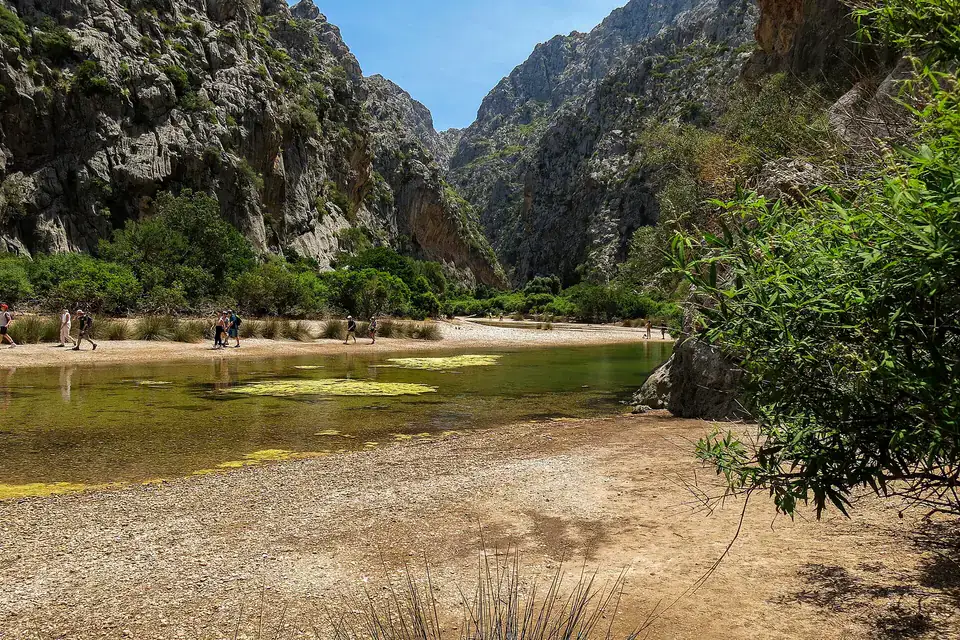
Transportes Marítimos Puerto de Sóller
Boat from Port de Sóller to Sa Calobra and Torrent de Pareis
About 2.5-hour trip along the north coast, with a swim and views of Sa Costera, Cala Tuent and Torrent de Pareis.
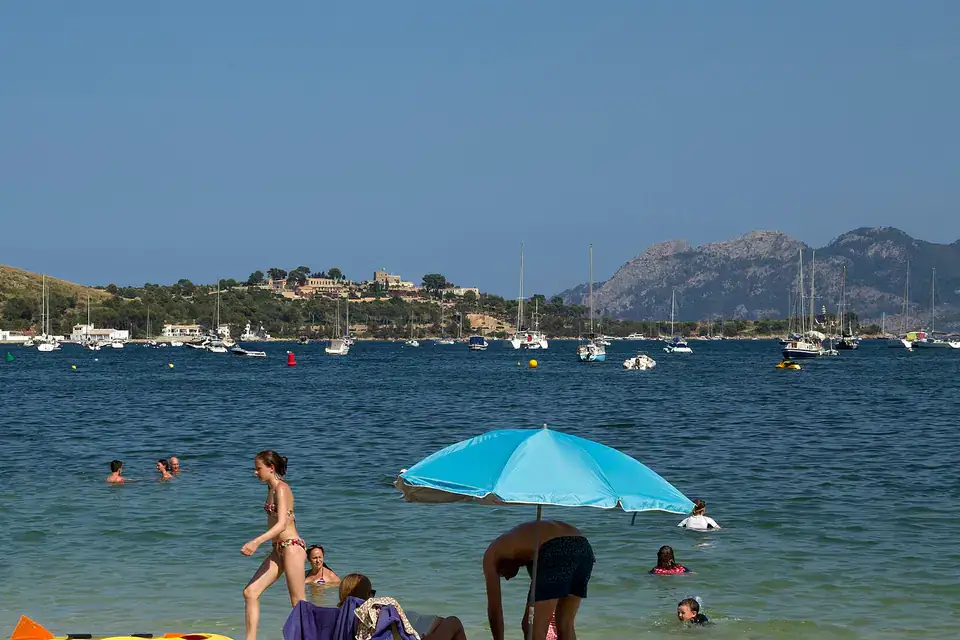
Ferry from Port de Pollença to Formentor Beach
About 30-minute crossing to Formentor beach, with a day ticket and a return time of your choice.
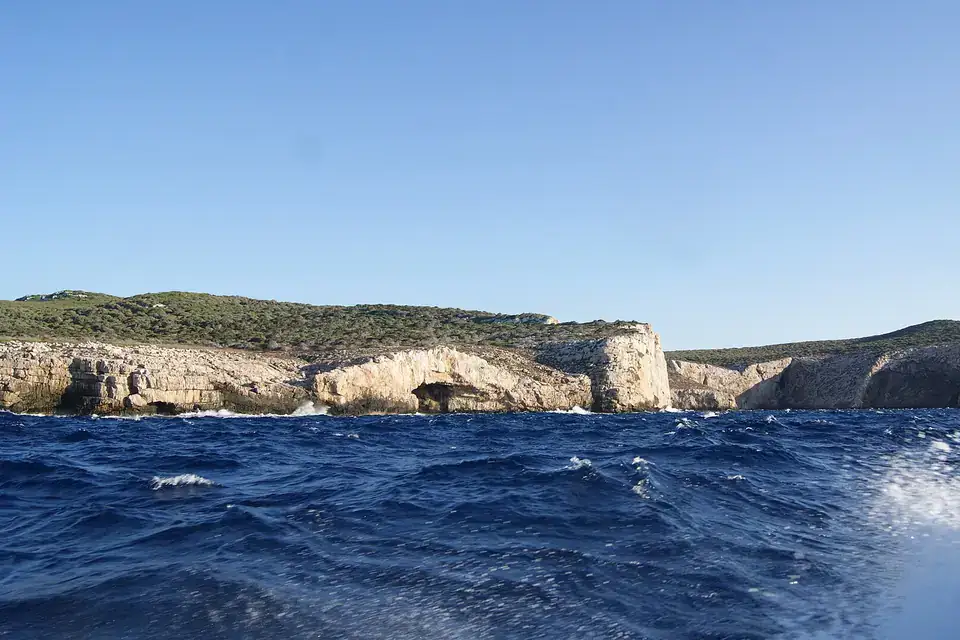
Cabrera National Park boat trip from Colònia de Sant Jordi (express or classic)
Crossing to the Cabrera archipelago, with a short option of about 3 hours or a longer one of about 6 with more time on the island.

Cabrera boat trip with swim stop (5 hours)
About 5-hour Cabrera trip from Colònia de Sant Jordi with a swim stop.
Closed on Sundays according to Google
Practical tips before boarding
Book ahead, especially if you travel in summer, with a car or on an overnight crossing with a cabin: Baleària and Trasmed recommend booking early for a better price and a place, and Baleària advises avoiding weekends and public holidays if you want the lowest fare.
Get to the port in good time: each operator sets its own. Trasmed states 60 minutes before departure with a vehicle and 30 on foot (and recommends 90 with a vehicle on Valencia–Palma); GNV, 2 hours before with a vehicle and 1 hour on foot, and after check-in only the driver goes up to the garage. Baleària shows it when you book.
Documents: ID card, passport or another valid identity document (article 27 of the Balearic law). GNV reminds travellers that children under 14 must travel accompanied and, if not with their parents, with a signed authorisation; also bring the vehicle documents.
Pets: Trasmed accepts dogs and cats on all its routes, in an adapted cabin, a kennel or, in a seat, up to 8 kg in a carrier, and asks for a valid health booklet and a separate ticket for the animal. Baleària offers calm-down kennels with video surveillance and pet-friendly seats; GNV accepts pets and refers to its pet policy (carrier, health documents). Check your operator's conditions before paying.
Sea and timetables: durations depend on the type of ship and the state of the sea, and GNV warns that timetables may vary by season. If you need to change your ticket, Trasmed allows it up to two hours before departure depending on the fare chosen: check which fare level you buy.
Official sources
Our own text, based on these sources as consulted up to 27 October 2026. Rules and traffic restrictions change: check them before you travel.
- Baleària: Barcelona–Mallorca ferry (routes, durations and timetables)
- Baleària: Valencia–Mallorca ferry
- Baleària: Dénia–Mallorca ferry
- Baleària: Mallorca–Ibiza ferry
- Baleària: Mallorca–Menorca ferry (Alcúdia–Ciutadella)
- Baleària: Mallorca–Formentera ferry
- Baleària: Ibiza–Formentera ferry
- Trasmed: routes and timetables (routes, pets, boarding lead time)
- Trasmed: Valencia–Palma ferry
- GNV: Palma port (terminal, durations and boarding lead time)
- GNV: Valencia–Palma ferry
- Corsica Ferries: crossings to Mallorca and Menorca from Toulon and Sète
- EMT Palma: line 1 Portopí–Sindicat (stops)
- TIB: lines 323, 325 and 327 in the Alcúdia area (29-04-2026)
- Balearic port authority (APB): port of Palma
- BOE: Ley 11/2010 on maritime transport in the Balearic Islands (consolidated text, Spanish)
- BOE: RD 1516/2007, regular coastal shipping lines and public service obligations (consolidated text, Spanish)
- Balearic government: resident discounts on regular maritime transport (in Catalan)
- Última Hora (2023): “Balears también se conecta por mar” (Spanish)
- Balearic government: Cabrera National Park (access, authorised companies, permits)
- Consell de Mallorca: traffic regulation at Formentor
- Lanchas La Gaviota: ferry to Formentor
Frequently asked questions
Which ferries go to Mallorca from the mainland and from France?
According to their websites, Baleària links Barcelona with Palma and Alcúdia, Valencia with Palma and Dénia with Palma; Trasmed lists Barcelona–Palma, Barcelona–Alcúdia and Valencia–Palma; and GNV lists Barcelona–Palma and Valencia–Palma. From France, Corsica Ferries lists Toulon–Alcúdia and Sète–Alcúdia. Check the season and dates with each operator.
How long does the ferry from Barcelona, Valencia or Dénia to Mallorca take?
According to Baleària, the fast ferry from Barcelona to Palma takes about 3 hours 30 minutes and the conventional one about 7 hours 15 minutes; Valencia–Palma, between 7 and 9 hours; and Dénia–Palma, about 5 hours 15 minutes with a stop in Ibiza. Trasmed and GNV give about 7 hours from Valencia, and GNV between 6 h 15 min and 7 h 30 min from Barcelona.
Is there a ferry from Mallorca to Ibiza, Menorca and Formentera?
Yes. Baleària lists Palma–Ibiza (fast ferry of about 2 hours), Alcúdia–Ciutadella (1 hour to 1 hour 15 minutes) and Mallorca–Formentera with a stop in Ibiza. Trasmed lists Palma–Ibiza, Palma–Maó, Alcúdia–Maó and Alcúdia–Ciutadella.
Are there public ferries in the Balearics and a discount for tourists?
We did not find any line with ships owned by a public authority: the ferries belong to private operators, although Balearic law declares three inter-island lines of strategic interest and sets minimums, and the State sets minimums on the lines to the mainland. The resident discount (50% from the State and 25% from the Balearic government) is only for people living on the islands; it does not apply to tourists.
Can I take my car, bike or pet on the ferry?
Baleària, Trasmed and GNV carry cars, motorbikes and vans; Baleària and GNV accept bicycles. Trasmed accepts dogs and cats (up to 8 kg in a seat, in a carrier) and Baleària and GNV also accept pets, each with its own conditions. For Ibiza and Formentera with a vehicle, access rules apply during the restricted periods.
How do I get from Palma port to the city centre?
The port is in the city, in front of the old town. EMT line 1 stops at Portopí Estacions Marítimes and runs along the Passeig Marítim to Plaça d'Espanya; at night there is the N1. GNV places its terminal a few minutes from the historic centre. Confirm timetables at emtpalma.es.
What documents do I need and how early should I arrive at the port?
ID card, passport or another identity document (article 27 of the Balearic law); children under 14 without their parents, a signed authorisation (GNV). Trasmed states 60 minutes before departure with a vehicle and 30 on foot; GNV, 2 hours with a vehicle and 1 hour on foot; Baleària shows the lead time when you book.
Can I go to Cabrera on my own?
Only with an authorised company or with your own boat and a free navigation permit (valid for one year), according to the Balearic government. The tourist boats leave from Colònia de Sant Jordi in the summer months; for 2026 there are four authorised companies.
Seasonal newsletter
Mallorca ideas for every month, in your inbox
What to do, which town to visit and what is at its best, season by season. No filler, and you can unsubscribe in one click.
More guides
- From Palma airport to your hotel: how to get there by bus, taxi, private transfer or hire car
- Almond blossom in Mallorca: when, where and which routes to do in January and February
- Car hire in Mallorca without surprises: insurance, excess, deposit and what to check at pick-up and return
- Boat trips in Mallorca: which one to pick, region by region
- Cabrera boat trip: boats from Colònia de Sant Jordi, how long it takes and what to see
- Catamaran trips in Mallorca: daytime, sunset or glass-bottom
- Cycling in Mallorca: guided bike tours, road bike hire and e-bike routes
- Cycling in Mallorca from February to April: Sa Calobra, Puig Major, Formentor and what to expect
- Caves of Drach: what the visit is like and how it compares with Hams, Artà and Génova
- Dolphin watching in Mallorca: boat trips, sunrise outings and honest expectations
- Private boat trips in Mallorca with a skipper: llaüts, motorboats and yachts by port
- Day trips from Cala Millor: glass-bottom boats, jeep tours, the Caves of Drach and family days out
- Day trips from Cala Ratjada: boats, snorkelling, the Artà caves and tours with pick-up
- Mallorca excursions: which organised day trip to choose and where from
- Winter festivals in Mallorca, November to February: Dijous Bo, Christmas, Three Kings, Sant Antoni and Sant Sebastià
- Golf in Mallorca: 12 eighteen-hole courses with green fees and seasons
- Jeep safari Mallorca: buggy, quad, jeep and trike tours compared
- Kayaking in Mallorca: guided tours to sea caves, coves and Dragonera
- Things to do in Mallorca with kids: by area and age
- Mallorca in winter, November to February: what is open, what closes and plans that work
- What to do in Mallorca when it rains: indoor ideas by area
- Mallorca without a car: how to get around by bus, train and bike, and which areas work well
- Sunset boat trips in Mallorca: catamaran, yacht, llaüt or kayak, port by port
- Things to see in Mallorca: the must-see sights, area by area
- Sa Calobra by boat from Port de Sóller, and the other ways to get there
- Dragonera island: getting there by boat from Sant Elm or Port d'Andratx, by kayak or with a guide
- Mallorca by scooter or motorbike: which licence you need, what the rules say and which routes to ride
- Hiking in Mallorca: guided and self-guided walks in the Tramuntana and beyond
- Snorkelling in Mallorca: boat trips, kayak tours and coves by area
- Scuba diving in Mallorca: try dives for beginners and boat dives for certified divers
- The Sóller train: how it works, what it costs and how to combine it with the tram and boat
- Sailing trips in Mallorca: half-day, private and multi-day, port by port
- Mallorca wine tours: where to visit a winery and taste, area by area
- Free and cheap things to do in Mallorca
- Easy, low-effort things to do in Mallorca