Guide
Mallorca by scooter or motorbike: which licence you need, what the rules say and which routes to ride
Hiring a scooter or motorbike in Mallorca: licence for 50 and 125 cc, helmet, gloves and shoes, parking in Palma, and routes through the Tramuntana, Sa Calobra and Formentor.
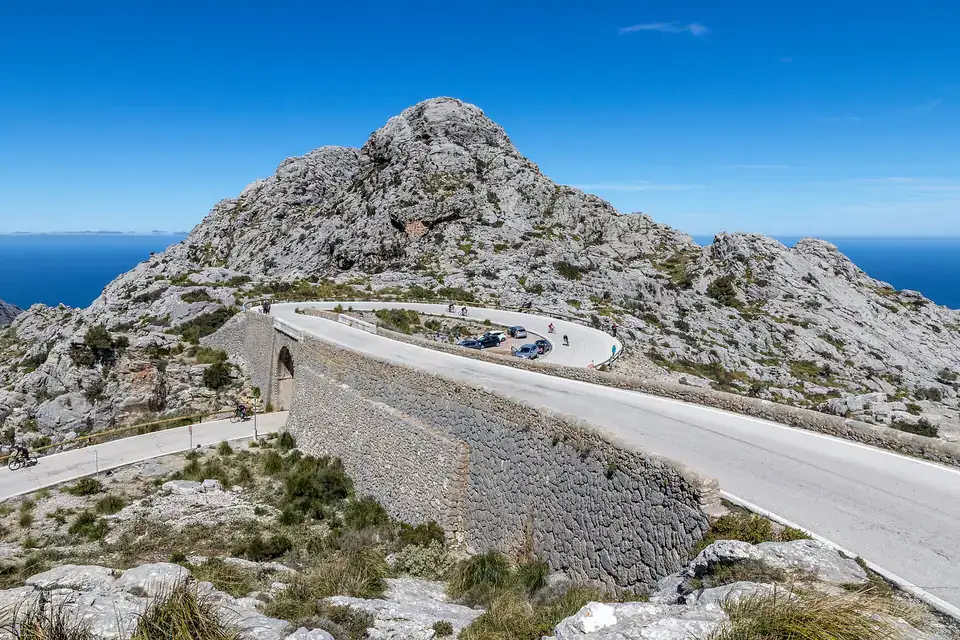
A scooter or motorbike is one of the best ways to get around Mallorca: parking is easier than with a car, you reach coves and villages with fewer queues, and the Serra de Tramuntana has mountain roads that draw many riders. It also asks more of you than a car: your licence matters, the protective-gear rules have just been tightened and some roads fill up with coaches and cyclists.
This guide gathers what is worth knowing before you hire: what you can ride with your licence, which gear has been compulsory since 1 October 2026, how to park in Palma without a fine, three routes with their safety warnings and what to look for in a rental contract. The legal facts come from the BOE (Spain's official gazette) and the DGT (the traffic authority), and we list them at the end. We do not list guided scooter or motorbike tours, and we do not make any up.
Which licence you need: 50 cc, 125 cc and bigger bikes
The driver regulation (BOE) defines four motorcycle licences. AM covers mopeds, which the DGT puts at up to 50 cc, and can be obtained at 15. A1 covers bikes up to 125 cm³, 11 kW and 0.1 kW/kg, from 16. A2 goes up to 35 kW and 0.2 kW/kg, from 18. A has no such limits and is available at 20. Those are the ages for the licence; the minimum age to hire is set by each rental company and may be higher.
With a car licence (B) you can ride 50 cc mopeds. For a 125 cc, article 4 of the regulation says that within Spain a B licence held for more than three years authorises the A1 bikes. Be careful if your licence is not Spanish: the text does not expressly extend that rule to licences from other countries, so we cannot promise that a rental company will accept it with a foreign B licence. Ask in writing before booking; with an A1, A2 or A licence there is no doubt.
There has been talk of a compulsory course for riding a 125 on a car licence. At the date of this guide it does not appear in article 4 of the consolidated regulation on the BOE or on the DGT's page on licence classes. If that changes, it should be announced there.
Helmet, gloves, shoes and vest: what the rules require since 1 October 2026
Decree 518/2026 of 24 June amended the General Traffic Regulation and came into force on 1 October 2026. For motorcyclists, article 118 now requires, for rider and passenger: an approved helmet (UNECE R22) properly fastened on every road, protective gloves on inter-urban roads and closed shoes covering the whole foot on every road. Flip-flops and sandals do not count. Until the order setting the technical specification for gloves is published, the decree says gloves like the current ones are used. If you hire a moped, helmets that are only certified, not approved, remain valid for one year from the date the decree came into force.
Motorbikes must also carry a high-visibility reflective vest as part of their equipment, and the rider must put it on when getting off and stepping onto the carriageway or hard shoulder of an inter-urban road. Ask the rental company whether the bike has one. And in daytime the dipped headlight must always be on (article 104).
Other rules people forget: a passenger must be over 12 and be listed as allowed on the vehicle's registration document; between 7 and 12 they may only ride with their father, mother or guardian, or an adult authorised by them, wearing a helmet. The alcohol limit is 0.5 g/l in blood or 0.25 mg/l in exhaled air, and 0.3 g/l or 0.15 mg/l during the first two years after passing the test. On conventional roads the general limit for motorbikes is 90 km/h and on dual carriageways 120, unless a sign says otherwise, and in the mountains it is worth always checking the signs.
Palma and the villages: parking, lanes and tolls
In the city a few rules are worth knowing. The traffic regulation bans parking on pavements, promenades and pedestrian areas (article 94), and Palma's traffic ordinance, in its consolidated text, also bans riding on pavements and promenades and parking bikes on pavements, pedestrian squares or green areas, except in zones expressly signposted for it. Those zones are marked by a sign with a P and the word MOTOS and a dashed yellow line on the ground. In the regulated parking areas the ordinance calls 0/0, leaving a bike in a bay marked for cars is prohibited. That ordinance is updated: always follow the sign in front of you.
You cannot stop in lanes reserved for public transport or bicycles either (article 94). And one piece of good news: the Sóller tunnel, the only toll road in the Balearics, has been free since 28 December 2017, according to the local press, so there is nothing to pay to cross the mountains through it.
The Serra de Tramuntana on the Ma-10: the island's great motorbike route
The Ma-10 runs through the mountains from Andratx to Pollença, more than a hundred kilometres of bends past Estellencs, Banyalbufar, Valldemossa, Deià, Sóller and Escorca, in a cultural landscape designated a UNESCO World Heritage Site. Difficulty: medium to high. It is not technical in a sporting sense, but it strings together blind bends, gradients and narrow stretches, and needs constant attention. The easiest way for a first time is a half-day section, for instance Valldemossa, Deià and Sóller with stops at the viewpoints, rather than the whole road in one go.
Safety warnings. Mallorca is one of Europe's most popular cycling destinations and the mountains draw many cyclists, especially in spring and autumn. Since 1 October 2026, article 85 requires you to overtake them leaving at least 1.5 metres, changing lane completely if there are two in your direction, and, outside built-up areas, slowing at least 20 km/h below the limit on the road. On some stretches coaches take up much of the width on tight bends: give way and do not overtake where you cannot see. Outside built-up areas the regulation also requires a motorbike to leave 1.5 metres when overtaking any vehicle. And the road has stretches with limits below the general one, and speed checks: obey the sign.
If you would rather not ride, the Sóller train and the bus are alternatives for reaching the mountains; we cover them in our Sóller train guide.
Sa Calobra on the Ma-2141: bends, coaches and cyclists
The road to Sa Calobra leaves the Ma-10 in the municipality of Escorca and drops to the cove through a series of hairpins, among them the Nus de sa Corbata (the Tie Knot), a bend that passes under itself. Difficulty: high if you are not used to mountain roads. It is worth it for the drive itself and for the Torrent de Pareis at the end, but it is narrow and shared by cars, coaches and cyclists.
Safety warnings. In spring and summer traffic builds up: according to the local press (Última Hora, April 2026), the most congested stretch is from the Coll dels Reis to Sa Calobra, and coaches struggle to pass cars on the tightest bends. Set off early, give way to coaches, do not stop on the carriageway and allow plenty of time for the climb back. The Consell has a project to renovate the road and limiting traffic is under discussion, but we have not found any measure in force; if that changes, its official channels will say so. More context in our Sa Calobra guide and, if you are interested in cycling, in the Mallorca cycling guide.
Cap de Formentor: seasonal traffic restrictions
The Ma-2210 leaves Port de Pollença for the tip of the island, with the Mirador des Colomer, Formentor beach and the lighthouse at the end. Difficulty: medium; the road is winding and, in season, traffic is what has led to it being regulated.
The restrictions change every year, because the DGT issues a new resolution. In 2026 the measures applied from 15 May to 18 October, from 10:00 to 22:00. In the first section, as far as the car park at Formentor beach (kilometre point 8+000), private vehicles may enter without authorisation while there is space; when it is full, a barrier at kilometre 2+000, on the Pollença side, lets only authorised vehicles through, and entering without permission is fined. The second section, to the lighthouse, has a barrier at 8+700 and only authorised vehicles pass. Motorbikes do not appear in the list of vehicles the DGT can authorise, so do not count on reaching the lighthouse by bike during those hours and, if in doubt, check with the DGT before you go.
The alternative is TIB bus line 334 (Alcúdia, Port de Pollença and the Formentor lighthouse), with stops at the Mirador des Colomer, Formentor beach and Cala Figuera-Cala Murta. Outside those dates and hours, the resolution's measures do not apply. Before going in 2027 or any other year, check the DGT's page on access to the Formentor lighthouse for the dates in force: at the date of this guide it says nothing about 2027.
The east coast and the south: Artà, Santanyí and Ses Salines
If you want a bike without the tension of the mountains, the east and the south are gentler. Difficulty: low to medium. The terrain is softer, with local roads between stone villages such as Artà, Capdepera or Santanyí, and the municipalities of Ses Salines and Felanitx let you link coves, salt pans and markets in a day. It is a good area to start out on a 125 or a scooter.
The warnings are the usual ones on an island with so much cycling: cyclists use these roads too, so the overtaking rules in article 85 apply just the same. The best-known coves are reached by narrow local roads; leave the bike only where it is allowed and do not take it onto pavements or footpaths. To decide where to go, see the page for each village, with its coves and best season.
Hiring: what to check before you sign and where to compare
The law requires the owner of any motor vehicle to hold third-party liability insurance (article 2 of the law on civil liability and motor insurance), so a reputable company's bike will have it. What differs from one contract to another is everything else: the excess you would pay for damage to the bike itself, whether theft is covered, roadside assistance, the deposit and how it is paid, whether a helmet is included and how many, whether there is a vest, the mileage (unlimited or capped), how fuel is handled on return, the minimum age and years of licence, and the cancellation terms. Take photos of the bike when you collect it and ask for anything you are told verbally in writing.
BikesBooking is a comparison site for scooter and motorbike hire that gathers companies, prices, conditions and pick-up points in Mallorca; the site itself warns that the documents required depend on each rental company, so read the listing of the offer you choose. We link it as an affiliate: if you book, we may earn a commission at no cost to you. To hire a bicycle, do not use it: see our cycling guide.
Some links are affiliate links: if you book, we may earn a commission at no cost to you. How affiliate links work
If you would rather someone else drove, or ride on three wheels
We do not list any guided scooter or motorbike tours, and we would rather say so than make one up. The closest thing in our directory is a guided trike tour, on a motorised tricycle, from Paguera along the south-west coast and the Tramuntana: about 130 km per trike for up to three people, with fuel, helmet and drinks, and fully comprehensive insurance paid separately. It is a way to see the mountains without keeping an eye on the map. For quads, buggies and jeeps, see our guide to buggy, quad and jeep tours.
4-5 hour trike tour along the south-west coast and the Tramuntana from Paguera
Guided trike tours of about 130 km (EUR 158 per trike, up to three people) via Palma, Sóller, Deià or Andratx, with fuel, helmet and cold drinks.
Official sources
Our own text, based on these sources as consulted up to 25 October 2026. Rules and traffic restrictions change: check them before you travel.
- BOE: General Driver Regulation (RD 818/2009), articles 4 and 21
- BOE: General Traffic Regulation (RD 1428/2003), consolidated text
- BOE: Decree 518/2026 of 24 June, protection of vulnerable road users
- BOE: civil liability and motor insurance (RDL 8/2004), article 2
- DGT: driving licence classes
- DGT: traffic regulation on access to the Formentor lighthouse
- Ajuntament de Palma: municipal traffic ordinance (consolidated text)
- Última Hora: the Sóller tunnel stops charging a toll (28-12-2017)
- Última Hora: chaos and queues on the Sa Calobra road (26-04-2026)
Frequently asked questions
Can I hire a 125 cc motorbike in Mallorca with a car licence?
Under article 4 of the driver regulation (BOE), in Spain a B licence held for more than three years authorises A1 motorbikes, up to 125 cm³, 11 kW and 0.1 kW/kg. The text does not expressly extend that rule to licences from other countries, so if yours is foreign, confirm in writing with the rental company that it accepts it. Each company also sets its own conditions.
Which licence do I need for a 50 cc scooter?
A car licence (B) authorises mopeds, and there is also the AM licence, from age 15. The DGT puts mopeds at up to 50 cc. The rental company may ask for a higher age or more years of licence than the law does.
Are gloves and closed shoes compulsory on a motorbike?
Yes, since 1 October 2026 (decree 518/2026, article 118 of the General Traffic Regulation): protective gloves on inter-urban roads and closed shoes covering the whole foot on every road, as well as an approved helmet, for rider and passenger. Flip-flops do not count.
Can I ride a motorbike up to the Formentor lighthouse in summer?
In 2026 the DGT applied restrictions from 15 May to 18 October, from 10:00 to 22:00. Private vehicles may go as far as the Formentor beach car park while there are spaces; only authorised vehicles go on to the lighthouse, and motorbikes are not in the list the DGT publishes. Outside those hours the measures do not apply. Each year's dates are published on the DGT's page.
Are there toll roads in Mallorca?
The Sóller tunnel was the only toll in the Balearics and has been free since 28 December 2017, according to the local press. We have found no other tolls on the roads this guide covers.
Can I carry a child as a passenger on a rental motorbike?
Under article 12 of the General Traffic Regulation, the passenger must be over 12 and be listed as allowed on the registration document. Children over 7 may exceptionally ride with their father, mother or guardian, or an adult authorised by them, always with an approved helmet. Also confirm with the rental company that the bike accepts a passenger.
Seasonal newsletter
Mallorca ideas for every month, in your inbox
What to do, which town to visit and what is at its best, season by season. No filler, and you can unsubscribe in one click.
More guides
- From Palma airport to your hotel: how to get there by bus, taxi, private transfer or hire car
- Almond blossom in Mallorca: when, where and which routes to do in January and February
- Car hire in Mallorca without surprises: insurance, excess, deposit and what to check at pick-up and return
- Boat trips in Mallorca: which one to pick, region by region
- Cabrera boat trip: boats from Colònia de Sant Jordi, how long it takes and what to see
- Catamaran trips in Mallorca: daytime, sunset or glass-bottom
- Cycling in Mallorca: guided bike tours, road bike hire and e-bike routes
- Cycling in Mallorca from February to April: Sa Calobra, Puig Major, Formentor and what to expect
- Caves of Drach: what the visit is like and how it compares with Hams, Artà and Génova
- Dolphin watching in Mallorca: boat trips, sunrise outings and honest expectations
- Private boat trips in Mallorca with a skipper: llaüts, motorboats and yachts by port
- Day trips from Cala Millor: glass-bottom boats, jeep tours, the Caves of Drach and family days out
- Day trips from Cala Ratjada: boats, snorkelling, the Artà caves and tours with pick-up
- Mallorca excursions: which organised day trip to choose and where from
- Mallorca ferry: from the mainland, between the islands (Ibiza, Menorca) and what counts as public service
- Winter festivals in Mallorca, November to February: Dijous Bo, Christmas, Three Kings, Sant Antoni and Sant Sebastià
- Golf in Mallorca: 12 eighteen-hole courses with green fees and seasons
- Jeep safari Mallorca: buggy, quad, jeep and trike tours compared
- Kayaking in Mallorca: guided tours to sea caves, coves and Dragonera
- Things to do in Mallorca with kids: by area and age
- Mallorca in winter, November to February: what is open, what closes and plans that work
- What to do in Mallorca when it rains: indoor ideas by area
- Mallorca without a car: how to get around by bus, train and bike, and which areas work well
- Sunset boat trips in Mallorca: catamaran, yacht, llaüt or kayak, port by port
- Things to see in Mallorca: the must-see sights, area by area
- Sa Calobra by boat from Port de Sóller, and the other ways to get there
- Dragonera island: getting there by boat from Sant Elm or Port d'Andratx, by kayak or with a guide
- Hiking in Mallorca: guided and self-guided walks in the Tramuntana and beyond
- Snorkelling in Mallorca: boat trips, kayak tours and coves by area
- Scuba diving in Mallorca: try dives for beginners and boat dives for certified divers
- The Sóller train: how it works, what it costs and how to combine it with the tram and boat
- Sailing trips in Mallorca: half-day, private and multi-day, port by port
- Mallorca wine tours: where to visit a winery and taste, area by area
- Free and cheap things to do in Mallorca
- Easy, low-effort things to do in Mallorca